
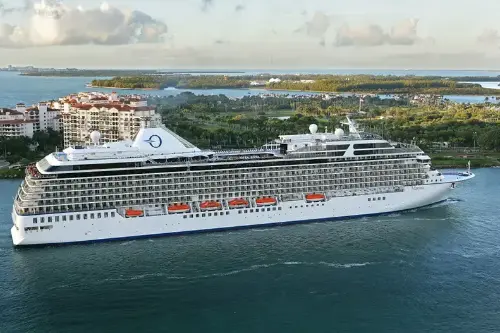
Sea cruise · 28.04.2026 – 12.06.2026 · 45 nights
Classic europe connoisseur
Route and cruise information
Premium- Rome (Civitavecchia)
- La Spezia
- Saint Tropez
- Barcelona
- Malaga
- Seville
- Casablanca
- Agadir
- Arrecife
- Santa Cruz de Tenerife (Canary Islands)
- Santa Cruz de Tenerife (Canary Islands)
- Madeira
- Lisbon
- Porto
- La Coruna
- Gijon
- Bilbao
- Saint-Jean-de-Luz (Biarritz)
- Bordeaux
- Bordeaux
- Bordeaux
- Saint-Malo
- St Peter Port
- Paris
- Cherbourg-Octeville
- Dunkirk
- IJmuiden
- Bruges
- London
- Torbay
- London
- Edinburgh
- Scrabster
- Ullapool
- Greencastle
- Dublin
- Holyhead
- Fishguard
- Waterford
- Cobh (Cork)
- Portland
- London
| Date | Port | Arrival | Departure |
|---|---|---|---|
| 28.04.2026 |
Rome (Civitavecchia)
Italy
|
07:00 | 18:00 |
| 29.04.2026 |
La Spezia
Italy
|
07:00 | 19:00 |
| 30.04.2026 |
Saint Tropez
France
|
08:00 | 16:00 |
| 01.05.2026 |
Barcelona
Spain
|
10:00 | 21:00 |
| 02.05.2026 |
Day at sea
|
— | — |
| 03.05.2026 |
Malaga
Spain
|
07:00 | 19:00 |
| 04.05.2026 |
Seville
Spain
|
07:00 | 19:00 |
| 05.05.2026 |
Casablanca
Morocco
|
07:00 | 16:00 |
| 06.05.2026 |
Agadir
Morocco
|
10:00 | 19:00 |
| 07.05.2026 |
Arrecife
Spain
|
10:30 | 20:00 |
| 08.05.2026 |
Santa Cruz de Tenerife (Canary Islands)
Spain
|
08:00 | 21:00 |
| 09.05.2026 |
Santa Cruz de Tenerife (Canary Islands)
Spain
|
07:00 | 17:00 |
| 10.05.2026 |
Madeira
Portugal
|
09:00 | 18:00 |
| 11.05.2026 |
Day at sea
|
— | — |
| 12.05.2026 |
Lisbon
Portugal
|
07:00 | 18:00 |
| 13.05.2026 |
Porto
Portugal
|
07:00 | 16:00 |
| 14.05.2026 |
La Coruna
Spain
|
07:00 | 17:00 |
| 15.05.2026 |
Gijon
Spain
|
07:00 | 17:00 |
| 16.05.2026 |
Bilbao
Spain
|
07:00 | 17:00 |
| 17.05.2026 |
Saint-Jean-de-Luz (Biarritz)
France
|
07:00 | 17:00 |
| 18.05.2026 |
Bordeaux
France
|
09:45 | — |
| 19.05.2026 |
Bordeaux
France
|
— | — |
| 20.05.2026 |
Bordeaux
France
|
— | 21:30 |
| 21.05.2026 |
Day at sea
|
— | — |
| 22.05.2026 |
Saint-Malo
France
|
10:00 | 21:30 |
| 23.05.2026 |
St Peter Port
Guernsey
|
07:00 | 17:00 |
| 24.05.2026 |
Paris
France
|
07:00 | 17:00 |
| 25.05.2026 |
Cherbourg-Octeville
France
|
07:00 | 17:00 |
| 26.05.2026 |
Dunkirk
France
|
09:00 | 19:00 |
| 27.05.2026 |
IJmuiden
Netherlands
|
09:00 | 19:00 |
| 28.05.2026 |
Bruges
Belgium
|
07:00 | 17:00 |
| 29.05.2026 |
London
Great Britain
|
07:00 | 17:00 |
| 30.05.2026 |
Torbay
|
09:00 | 19:00 |
| 31.05.2026 |
London
Great Britain
|
07:00 | 21:00 |
| 01.06.2026 |
Day at sea
|
— | — |
| 02.06.2026 |
Edinburgh
Great Britain
|
09:00 | 17:00 |
| 03.06.2026 |
Scrabster
Scotland
|
08:00 | 17:00 |
| 04.06.2026 |
Ullapool
Scotland
|
07:00 | 17:00 |
| 05.06.2026 |
Greencastle
|
08:00 | 19:00 |
| 06.06.2026 |
Dublin
Ireland
|
07:00 | 16:00 |
| 07.06.2026 |
Holyhead
Great Britain
|
07:00 | 19:00 |
| 08.06.2026 |
Fishguard
Great Britain
|
07:00 | 19:00 |
| 09.06.2026 |
Waterford
Ireland
|
07:00 | 19:00 |
| 10.06.2026 |
Cobh (Cork)
Ireland
|
07:00 | 16:00 |
| 11.06.2026 |
Portland
USA
|
11:30 | 18:30 |
| 12.06.2026 |
London
Great Britain
|
07:00 | — |
-
 Day 1: 07:00–18:00
Rome (Civitavecchia) / Italy
Rome is the capital city and a special comune of Italy (named Comune di Roma Capitale). Rome also serves as the capital of the Lazio region. With 2,872,800 residents in 1,285 km2(496.1 sq mi), it is also the country's most populated comune. It is the fourth-most populous city in the European Union by population within city limits. It is the centre of the Metropolitan City of Rome, which has a population of 4,355,725 residents, thus making it the most populous metropolitan city in Italy. Rome is located in the central-western portion of the Italian Peninsula, within Lazio (Latium), along the shores of the Tiber. The Vatican City (the smallest country in the world) is an independent country inside the city boundaries of Rome, the only existing example of a country within a city: for this reason Rome has been often defined as capital of two states.
Rome's history spans 28 centuries. While Roman mythology dates the founding of Rome at around 753 BC, the site has been inhabited for much longer, making it one of the oldest continuously occupied sites in Europe. The city's early population originated from a mix of Latins, Etruscans, and Sabines. Eventually, the city successively became the capital of the Roman Kingdom, the Roman Republic and the Roman Empire, and is regarded as the birthplace of Western civilization and by some as the first ever metropolis. It was first called The Eternal City (Latin: Urbs Aeterna; Italian: La Città Eterna) by the Roman poet Tibullus in the 1st century BC, and the expression was also taken up by Ovid, Virgil, and Livy. Rome is also called the "Caput Mundi" (Capital of the World). After the fall of the Western Empire, which marked the beginning of the Middle Ages, Rome slowly fell under the political control of the Papacy, which had settled in the city since the 1st century AD, until in the 8th century it became the capital of the Papal States, which lasted until 1870. Beginning with the Renaissance, almost all the popes since Nicholas V (1447–1455) pursued over four hundred years a coherent architectural and urban programme aimed at making the city the artistic and cultural centre of the world. In this way, Rome became first one of the major centres of the Italian Renaissance, and then the birthplace of both the Baroque style and Neoclassicism. Famous artists, painters, sculptors and architects made Rome the centre of their activity, creating masterpieces throughout the city. In 1871, Rome became the capital of the Kingdom of Italy, which, in 1946, became the Italian Republic.
Rome has the status of a global city. In 2016, Rome ranked as the 14th-most-visited city in the world, 3rd most visited in the European Union, and the most popular tourist attraction in Italy. Its historic centre is listed by UNESCO as a World Heritage Site. The famous Vatican Museums are among the world's most visited museums while the Colosseum was the most popular tourist attraction in world with 7.4 million visitors in 2018. Host city for the 1960 Summer Olympics, Rome is the seat of several specialized agencies of the United Nations, such as the Food and Agriculture Organization (FAO), the World Food Programme (WFP) and the International Fund for Agricultural Development (IFAD). The city also hosts the Secretariat of the Parliamentary Assembly of the Union for the Mediterranean (UfM) as well as the headquarters of many international business companies such as Eni, Enel, TIM, Leonardo S.p.A., and national and international banks such as Unicredit and BNL. Its business district, called EUR, is the base of many companies involved in the oil industry, the pharmaceutical industry, and financial services. Rome is also an important fashion and design centre thanks to renowned international brands centered in the city. Rome's Cinecittà Studios have been the set of many Academy Award–winning movies.
-
 Day 2: 07:00–19:00
La Spezia / Italy
-
 Day 3: 08:00–16:00
Saint Tropez / France
Saint-Tropez is a town on the French Riviera, 100 kilometres (62 miles) west of Nice in the Var department of the Provence-Alpes-Côte d'Azur region of southeastern France.
Saint-Tropez was a military stronghold and fishing village until the beginning of the 20th century. It was the first town on this coast to be liberated during World War II as part of Operation Dragoon. After the war, it became an internationally known seaside resort, renowned principally because of the influx of artists of the French New Wave in cinema and the Yé-yé movement in music. It later became a resort for the European and American jet set and tourists.
-
 Day 4: 10:00–21:00
Barcelona / Spain
Barcelona is a city in Spain. It is the capital and largest city of Catalonia, as well as the second most populous municipality of Spain. With a population of 1.6 million within city limits, its urban area extends to numerous neighbouring municipalities within the Province of Barcelona and is home to around 4.8 million people, making it the sixth most populous urban area in the European Union after Paris, London, Madrid, the Ruhr area and Milan. It is one of the largest metropolises on the Mediterranean Sea, located on the coast between the mouths of the rivers Llobregat and Besòs, and bounded to the west by the Serra de Collserola mountain range, the tallest peak of which is 512 metres (1,680 feet) high.
Founded as a Roman city, in the Middle Ages Barcelona became the capital of the County of Barcelona. After merging with the Kingdom of Aragon, Barcelona continued to be an important city in the Crown of Aragon as an economic and administrative centre of this Crown and the capital of the Principality of Catalonia. Barcelona has a rich cultural heritage and is today an important cultural centre and a major tourist destination. Particularly renowned are the architectural works of Antoni Gaudí and Lluís Domènech i Montaner, which have been designated UNESCO World Heritage Sites. The headquarters of the Union for the Mediterranean are located in Barcelona. The city is known for hosting the 1992 Summer Olympics as well as world-class conferences and expositions and also many international sport tournaments.
Barcelona is one of the world's leading tourist, economic, trade fair and cultural centres, and its influence in commerce, education, entertainment, media, fashion, science, and the arts all contribute to its status as one of the world's major global cities. It is a major cultural and economic centre in southwestern Europe, 24th in the world (before Zürich, after Frankfurt) and a financial centre. In 2008 it was the fourth most economically powerful city by GDP in the European Union and 35th in the world with GDP amounting to €177 billion. In 2012 Barcelona had a GDP of $170 billion; and it was leading Spain in employment rate in that moment.
In 2009 the city was ranked Europe's third and one of the world's most successful as a city brand. In the same year the city was ranked Europe's fourth best city for business and fastest improving European city, with growth improved by 17% per year, and the city has been experiencing strong and renewed growth for the past three years. Since 2011 Barcelona has been a leading smart city in Europe. Barcelona is a transport hub, with the Port of Barcelona being one of Europe's principal seaports and busiest European passenger port, an international airport, Barcelona–El Prat Airport, which handles over 50 million passengers per year, an extensive motorway network, and a high-speed rail line with a link to France and the rest of Europe.
-
Day 5:
Day at sea / Sea
-
 Day 6: 07:00–19:00
Malaga / Spain
Málaga is a municipality, capital of the Province of Málaga, in the Autonomous Community of Andalusia, Spain. With a population of 569,130 in 2015, it is the second-most populous city of Andalusia and the sixth-largest in Spain. The southernmost large city in Europe, it lies on the Costa del Sol (Coast of the Sun) of the Mediterranean, about 100 kilometres (62.14 miles) east of the Strait of Gibraltar and about 130 km (80.78 mi) north of Africa.
Málaga's history spans about 2,800 years, making it one of the oldest cities in the world. According to most scholars, it was founded about 770 BC by the Phoenicians as Malaka From the 6th century BC the city was under the hegemony of Ancient Carthage, and from 218 BC, it was ruled by the Roman Republic and then empire as Malaca (Latin). After the fall of the empire and the end of Visigothic rule, it was under Islamic rule as Mālaqah for 800 years, but in 1487, the Crown of Castille gained control after the Reconquista. The archaeological remains and monuments from the Phoenician, Roman, Arabic and Christian eras make the historic center of the city an "open museum", displaying its history of nearly 3,000 years.
This important cultural infrastructure and the artistic heritage have culminated in the nomination of Málaga as a candidate for the 2016 European Capital of Culture.
The painter and sculptor Pablo Picasso, Hebrew poet and Jewish philosopher Solomon Ibn Gabirol and the actor Antonio Banderas were born in Málaga. The magnum opus of Cuban composer Ernesto Lecuona, "Malagueña", is named after the music of this region of Spain.
The most important business sectors in Málaga are tourism, construction and technology services, but other sectors such as transportation and logistics are beginning to expand. The Andalusia Technology Park (PTA), located in Málaga, has enjoyed significant growth since its inauguration in 1992. Málaga is the main economic and financial centre of southern Spain, home of the region's largest bank, Unicaja, and the fourth-ranking city in economic activity in Spain behind Madrid, Barcelona and Valencia.
-
 Day 7: 07:00–19:00
Seville / Spain
Seville is the capital and largest city of the autonomous community of Andalusia and the province of Seville, Spain. It is situated on the plain of the river Guadalquivir. The inhabitants of the city are known as sevillanos (feminine form: sevillanas) or hispalenses, after the Roman name of the city, Hispalis. Seville has a municipal population of about 690,000 as of 2016, and a metropolitan population of about 1.5 million, making it the fourth-largest city in Spain and the 30th most populous municipality in the European Union. Its Old Town, with an area of 4 square kilometres (2 sq mi), contains three UNESCO World Heritage Sites: the Alcázar palace complex, the Cathedral and the General Archive of the Indies. The Seville harbour, located about 80 kilometres (50 miles) from the Atlantic Ocean, is the only river port in Spain. Seville is also the hottest major metropolitan area in the geographical Southwestern Europe, with summer average high temperatures of above 35 °C (95 °F).
Seville was founded as the Roman city of Hispalis. It later became known as Ishbiliyya after the Muslim conquest in 712. During the Muslim rule in Spain, Seville came under the jurisdiction of the Caliphate of Córdoba before becoming the independent Taifa of Seville; later it was ruled by the Muslim Almoravids and the Almohads until finally being incorporated into the Christian Kingdom of Castile under Ferdinand III in 1248. After the discovery of the Americas, Seville became one of the economic centres of the Spanish Empire as its port monopolised the trans-oceanic trade and the Casa de Contratación (House of Trade) wielded its power, opening a Golden Age of arts and literature. In 1519, Ferdinand Magellan departed from Seville for the first circumnavigation of the Earth. Coinciding with the Baroque period of European history, the 17th century in Seville represented the most brilliant flowering of the city's culture; then began a gradual economic and demographic decline as silting in the Guadalquivirforced the trade monopoly to relocate to the nearby port of Cádiz.
The 20th century in Seville saw the tribulations of the Spanish Civil War, decisive cultural milestones such as the Ibero-American Exposition of 1929 and Expo '92, and the city's election as the capital of the Autonomous Community of Andalusia.
-
 Day 8: 07:00–16:00
Casablanca / Morocco
Casablanca located in the central-western part of Morocco and bordering the Atlantic Ocean, is the largest city in Morocco. It is also the largest city in the Maghreb region, as well as one of the largest and most important cities in Africa, both economically and demographically.
Casablanca is Morocco's chief port and one of the largest financial centers on the continent. According to the 2014 population estimate, the city has a population of about 3.35 million in the urban area and over 6.8 million in the Casablanca-Settat region. Casablanca is considered the economic and business center of Morocco, although the national political capital is Rabat.
The leading Moroccan companies and international many corporations doing business in the country have their headquarters and main industrial facilities in Casablanca. Recent industrial statistics show Casablanca retains its historical position as the main industrial zone of the country. The Port of Casablanca is one of the largest artificial ports in the world, and the second largest port of North Africa, after Tanger-Med 40 km (25 mi) east of Tangier. Casablanca also hosts the primary naval base for the Royal Moroccan Navy.
-
 Day 9: 10:00–19:00
Agadir / Morocco
Agadir is the center of modern tourism in Morocco. Agadir Beach stretches for 10 km. The beautiful golden beach, surrounded by eucalyptus greenery and pine trees, is the most beautiful place among all Moroccan resorts. In Agadir, tourists will always find entertainment to their liking. Here you can ride camels or thoroughbred horses, play golf and tennis, smoke hookah, or experience all the delights of sea fishing. In the city's restaurants, you can taste the freshest and most delicious seafood, the assortment of which is simply magnificent: sea bass, sardines, tuna, shrimp, lobsters, crayfish. You can buy alcohol everywhere, but remember to do it before eight in the evening. And don't forget to visit the Medina of Agadir – a city built by an Italian architect. Inside the Medina, there are more than 30 shops and workshops.
-
 Day 10: 10:30–20:00
Arrecife / Spain
-
 Day 11: 08:00–21:00
Santa Cruz de Tenerife (Canary Islands) / Spain
-
Day 12: 07:00–17:00
Santa Cruz de Tenerife (Canary Islands) / Spain
-
 Day 13: 09:00–18:00
Madeira / Portugal
Madeira, officially the Autonomous Region of Madeira, is one of the two autonomous regions of Portugal (along with the Azores). It is an archipelago situated in the north Atlantic Ocean, southwest of Portugal. Its total population was estimated in 2011 at 267,785. The capital of Madeira is Funchal, which is located on the main island's south coast.
The archipelago is just under 400 kilometres (250 mi) north of Tenerife, Canary Islands. Bermuda and Madeira, a few time zones apart, are the only land in the Atlantic on the 32nd parallel north. It includes the islands of Madeira, Porto Santo, and the Desertas, administered together with the separate archipelago of the Savage Islands. The region has political and administrative autonomy through the Administrative Political Statue of the Autonomous Region of Madeiraprovided for in the Portuguese Constitution. The autonomous region is an integral part of the European Union as an outermost region.
-
Day 14:
Day at sea / Sea
-
 Day 15: 07:00–18:00
Lisbon / Portugal
Lisbon is the capital and the largest city of Portugal, with an estimated population of 505,526 within its administrative limits in an area of 100.05 km2. Its urban area extends beyond the city's administrative limits with a population of around 2.8 million people, being the 11th-most populous urban area in the European Union. About 3 million people live in the Lisbon Metropolitan Area (which represents approximately 27% of the country's population). It is mainland Europe's westernmost capital city and the only one along the Atlantic coast. Lisbon lies in the western Iberian Peninsula on the Atlantic Ocean and the River Tagus. The westernmost areas of its metro area form the westernmost point of Continental Europe, which is known as Cabo da Roca, located in the Sintra Mountains.
-
 Day 16: 07:00–16:00
Porto / Portugal
Порту является вторым по величине городом Португалии после Лиссабона и одним из крупных городских районов Пиренейского полуострова. Население самого города составляет 237 591 человек, а в столичном районе Порту, который выходит за административные пределы города, проживает 1,9 миллиона человек (2011 год) на площади 2 395 км2 (925 кв. Миль), что делает его вторым самый большой городской район в Португалии. Он признан глобальным городом гамма-уровня Исследовательской группой по глобализации и глобальным городам (GaWC), единственным португальским городом, кроме Лиссабона, который был признан глобальным городом.
Расположенный вдоль устья реки Дору на севере Португалии, Порту является одним из старейших европейских центров, и его историческое ядро было объявлено ЮНЕСКО объектом Всемирного наследия в 1996 году. Западная часть его городской территории простирается до береговой линии Атлантического океана. Его поселение датируется много веков, когда он был форпостом Римской империи. Его объединенное кельтско-латинское имя, Portus Cale, было названо происхождением названия «Португалия», основанного на транслитерации и устной эволюции от латыни. На португальском языке название города пишется с определенной статьей о Порту ; следовательно, его английское название произошло от неправильного толкования устного произношения и упоминается как Опорто в современной литературе и многими ораторами.
-
 Day 17: 07:00–17:00
La Coruna / Spain
Travelers find in La Coruña the perfect place to experience the atmosphere of Spain’s Atlantic coast, where modern promenades meet historical landmarks and cozy beaches. The city is known for having the world’s oldest functioning Roman lighthouse – the Tower of Hercules, built nearly 2000 years ago and still guiding ships today. Here, you can enjoy a stroll along one of Europe’s longest seafront promenades, taking in ocean panoramas and the fresh breeze.
In La Coruña, guests discover the rich Galician gastronomic culture, with seafood served in traditional tapas bars and contemporary restaurants. Local markets delight with fresh products, while the city’s cultural life is filled with festivals, exhibitions, and live street music. This destination offers travelers a unique blend of historical depth, sea views, and warm Spanish atmosphere, leaving a sense of lightness and inspiration after the visit.
-
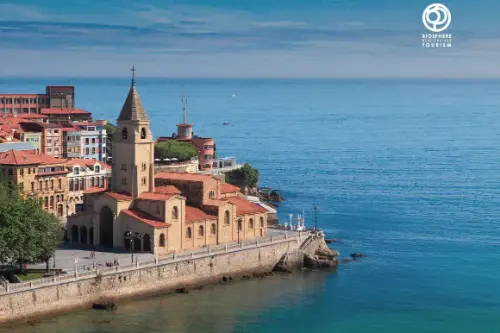 Day 18: 07:00–17:00
Gijon / Spain
Along the scenic coast of the Bay of Biscay in the Spanish region of Asturias lies the charming city of Gijon, captivating visitors with its unique blend of culture, nature, and gastronomy. Here, you can enjoy walks along the picturesque San Lorenzo beaches, visit numerous contemporary art museums, and taste the famous Asturian cider in traditional “chigres.”
Gijon is the perfect destination for those who appreciate a mix of history and modern life. Beyond its beautiful beaches and cozy streets, the city is known for lively festivals like the Sea Festival and Song Festival, which add vibrant colors to any trip. For active travelers, there are various water sports and hiking routes that reveal breathtaking coastal views.
-
 Day 19: 07:00–17:00
Bilbao / Spain
Bilbao is a city in northern Spain, the largest city in the province of Biscay and in the Basque Country as a whole. It is also the largest city proper in northern Spain. Bilbao is the tenth largest city in Spain, with a population of 345,141 as of 2015. The Bilbao metropolitan area has roughly 1 million inhabitants, making it one of the most populous metropolitan areas in northern Spain; with a population of 875,552 the comarca of Greater Bilbao is the fifth-largest urban area in Spain. Bilbao is also the main urban area in what is defined as the Greater Basque region.
Bilbao is situated in the north-central part of Spain, some 16 kilometres (10 mi) south of the Bay of Biscay, where the economic social development is located, where the estuary of Bilbao is formed. Its main urban core is surrounded by two small mountain ranges with an average elevation of 400 metres (1,300 ft). Its climate is shaped by the Bay of Biscay low-pressure systems and mild air, moderating summer temperatures by Iberian standards, with low sunshine and high rainfall. The annual temperature range is low for its latitude.
After its foundation in the early 14th century by Diego López V de Haro, head of the powerful Haro family, Bilbao was a commercial hub of the Basque Country that enjoyed significant importance in Green Spain. This was due to its port activity based on the export of iron extracted from the Biscayan quarries. Throughout the nineteenth century and the beginning of the twentieth, Bilbao experienced heavy industrialisation, making it the centre of the second-most industrialised region of Spain, behind Barcelona. At the same time an extraordinary population explosion prompted the annexation of several adjacent municipalities. Nowadays, Bilbao is a vigorous service city that is experiencing an ongoing social, economic, and aesthetic revitalisation process, started by the iconic Bilbao Guggenheim Museum, and continued by infrastructure investments, such as the airport terminal, the rapid transit system, the tram line, the Azkuna Zentroa, and the currently under development Abandoibarra and Zorrozaurrerenewal projects.
Bilbao is also home to football club Athletic Club de Bilbao, a significant symbol for Basque nationalism due to its promotion of only Basque players and one of the most successful clubs in Spanish football history.
On 19 May 2010, the city of Bilbao was recognised with the Lee Kuan Yew World City Prize, awarded by the city state of Singapore, in collaboration with the Swedish Nobel Academy. Considered the Nobel Prize for urbanism, it was handed out on 29 June 2010. On 7 January 2013, its mayor, Iñaki Azkuna, received the 2012 World Mayor Prize awarded every two years by the British foundation The City Mayors Foundation, in recognition of the urban transformation experienced by the Biscayan capital since the 1990s. On 8 November 2017, Bilbao was chosen the Best European City 2018 at The Urbanism Awards 2018, awarded by the international organisation The Academy of Urbanism.
-
 Day 20: 07:00–17:00
Saint-Jean-de-Luz (Biarritz) / France
-
 Day 21: 09:45
Bordeaux / France
Bordeaux is a port city on the Garonne in the Gironde department in Southwestern France.
The municipality (commune) of Bordeaux proper has a population of 246,586 (2014). Together with its suburbs and satellite towns, Bordeaux is the centre of the Bordeaux Métropole. With 1,195,335 in the metropolitan area, it is the sixth-largest in France, after Paris, Marseille, Lyon, Toulouse, and Lille. It is the capital of the Nouvelle-Aquitaineregion, as well as the prefecture of the Gironde department. Its inhabitants are called "Bordelais" (for men) or "Bordelaises" (women). The term "Bordelais" may also refer to the city and its surrounding region.
Being at the center of a major wine-growing and wine-producing region, Bordeaux remains a prominent powerhouse and exercises significant influence on the world wine industry although no wine production is conducted within the city limits. It is home to the world's main wine fair, Vinexpo, and the wine economy in the metro area takes in 14.5 billion euros each year. Bordeaux wine has been produced in the region since the 8th century. The historic part of the city is on the UNESCO World Heritage List as "an outstanding urban and architectural ensemble" of the 18th century.[7] After Paris, Bordeaux has the highest number of preserved historical buildings of any city in France.
-
Day 22:
Bordeaux / France
Bordeaux is a port city on the Garonne in the Gironde department in Southwestern France.
The municipality (commune) of Bordeaux proper has a population of 246,586 (2014). Together with its suburbs and satellite towns, Bordeaux is the centre of the Bordeaux Métropole. With 1,195,335 in the metropolitan area, it is the sixth-largest in France, after Paris, Marseille, Lyon, Toulouse, and Lille. It is the capital of the Nouvelle-Aquitaineregion, as well as the prefecture of the Gironde department. Its inhabitants are called "Bordelais" (for men) or "Bordelaises" (women). The term "Bordelais" may also refer to the city and its surrounding region.
Being at the center of a major wine-growing and wine-producing region, Bordeaux remains a prominent powerhouse and exercises significant influence on the world wine industry although no wine production is conducted within the city limits. It is home to the world's main wine fair, Vinexpo, and the wine economy in the metro area takes in 14.5 billion euros each year. Bordeaux wine has been produced in the region since the 8th century. The historic part of the city is on the UNESCO World Heritage List as "an outstanding urban and architectural ensemble" of the 18th century.[7] After Paris, Bordeaux has the highest number of preserved historical buildings of any city in France.
-
Day 23: 21:30
Bordeaux / France
Bordeaux is a port city on the Garonne in the Gironde department in Southwestern France.
The municipality (commune) of Bordeaux proper has a population of 246,586 (2014). Together with its suburbs and satellite towns, Bordeaux is the centre of the Bordeaux Métropole. With 1,195,335 in the metropolitan area, it is the sixth-largest in France, after Paris, Marseille, Lyon, Toulouse, and Lille. It is the capital of the Nouvelle-Aquitaineregion, as well as the prefecture of the Gironde department. Its inhabitants are called "Bordelais" (for men) or "Bordelaises" (women). The term "Bordelais" may also refer to the city and its surrounding region.
Being at the center of a major wine-growing and wine-producing region, Bordeaux remains a prominent powerhouse and exercises significant influence on the world wine industry although no wine production is conducted within the city limits. It is home to the world's main wine fair, Vinexpo, and the wine economy in the metro area takes in 14.5 billion euros each year. Bordeaux wine has been produced in the region since the 8th century. The historic part of the city is on the UNESCO World Heritage List as "an outstanding urban and architectural ensemble" of the 18th century.[7] After Paris, Bordeaux has the highest number of preserved historical buildings of any city in France.
-
Day 24:
Day at sea / Sea
-
 Day 25: 10:00–21:30
Saint-Malo / France
The sea breeze and the cries of seagulls accompany you in Saint-Malo, a city on the Brittany coast that has preserved its spirit of maritime adventure and independence. Here, high fortress walls embrace narrow streets, while cobblestone paths lead you to cozy cafes overlooking the ocean. The history of pirates and sailors comes alive as you walk along the ramparts, watch the tides transform the coastline, or take a boat to visit the famous Grand Bé island, where the writer Chateaubriand is buried.
In Saint-Malo, you can enjoy fresh seafood in local restaurants, taste oysters harvested from nearby waters, or simply have a picnic on the sandy beaches revealed at low tide. The city offers a sense of both coziness and freedom, blending picturesque architecture with the energy of the Atlantic, while the sea breeze and salty air remind you that here, history and nature always walk beside you.
-
 Day 26: 07:00–17:00
St Peter Port / Guernsey
-
 Day 27: 07:00–17:00
Paris / France
the capital of France, on the Seine River; population 2,203,817 (2006). Paris was held by the Romans, who called it Lutetia, and by the Franks, and was established as the capital in 987 under Hugh Capet. It was organized into three parts—the Île de la Cité (an island in the Seine), the Right Bank, and the Left Bank—during the reign of Philippe-Auguste 1180–1223. The city's neoclassical architecture dates from the modernization of the Napoleonic era, which continued under Napoleon III, when the bridges and boulevards of the modern city were built.
-
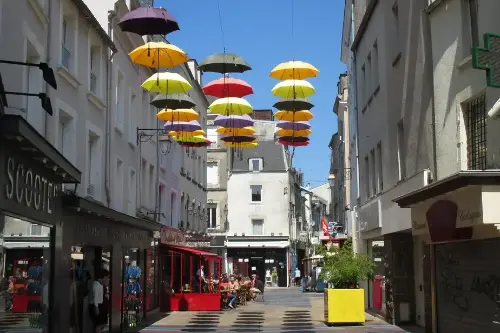 Day 28: 07:00–17:00
Cherbourg-Octeville / France
Cherbourg-Octeville, a charming port town in Normandy, is known for its rich maritime history and stunning views of the English Channel. It played a significant role during World War II, particularly as the site of the famous Allied landing in 1944. Visitors can explore its renowned port, which is one of the largest in France, and enjoy the picturesque Old Town with its cobbled streets and historic buildings. The city is also home to several museums, including the Cité de la Mer, dedicated to maritime exploration and the Titanic.
The town's dramatic coastline is perfect for strolls along the sea, with its cliffs offering breathtaking views. Visitors can also experience Cherbourg's cultural offerings, including its theaters, festivals, and galleries. The blend of natural beauty, historical significance, and cultural charm makes Cherbourg-Octeville a must-visit destination for travelers to Normandy.
-
 Day 29: 09:00–19:00
Dunkirk / France
-
Day 30: 09:00–19:00
IJmuiden / Netherlands
-
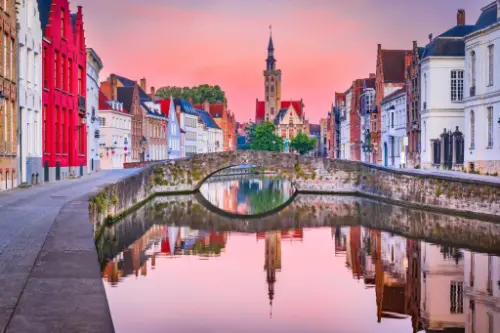 Day 31: 07:00–17:00
Bruges / Belgium
Bruges is the capital and largest city of the province of West Flanders in the Flemish Region of Belgium, in the northwest of the country.
The area of the whole city amounts to more than 13,840 hectares (138.4 sq km; 53.44 sq miles), including 1,075 hectares off the coast, at Zeebrugge (from Brugge aan zee, meaning "Bruges by the Sea"). The historic city centre is a prominent World Heritage Site of UNESCO. It is oval in shape and about 430 hectares in size. The city's total population is 117,073 (1 January 2008), of whom around 20,000 live in the city centre. The metropolitan area, including the outer commuter zone, covers an area of 616 km2 (238 sq mi) and has a total of 255,844 inhabitants as of 1 January 2008.
Along with a few other canal-based northern cities, such as Amsterdam, it is sometimes referred to as the Venice of the North. Bruges has a significant economic importance, thanks to its port, and was once one of the world's chief commercial cities. Bruges is well known as the seat of the College of Europe, a university institute for European studies.
-
 Day 32: 07:00–17:00
London / Great Britain
-
Day 33: 09:00–19:00
Torbay
-
Day 34: 07:00–21:00
London / Great Britain
-
Day 35:
Day at sea / Sea
-
 Day 36: 09:00–17:00
Edinburgh / Great Britain
-
 Day 37: 08:00–17:00
Scrabster / Scotland
-
 Day 38: 07:00–17:00
Ullapool / Scotland
-
Day 39: 08:00–19:00
Greencastle
-
 Day 40: 07:00–16:00
Dublin / Ireland
Dublin is the capital of, and largest city in, Ireland. It is on the east coast of Ireland, in the province of Leinster, at the mouth of the River Liffey, and is bordered on the south by the Wicklow mountains. It has an urban area population of 1,173,179, while the population of the Dublin Region (formerly County Dublin), as of 2016, was 1,347,359, and the population of the Greater Dublin area was 1,904,806.
There is archaeological debate regarding precisely where Dublin was established by Celtic-speaking people in the 7th century AD. Later expanded as a Viking settlement, the Kingdom of Dublin, the city became Ireland's principal settlement following the Norman invasion. The city expanded rapidly from the 17th century and was briefly the second largest city in the British Empire before the Acts of Union in 1800. Following the partition of Ireland in 1922, Dublin became the capital of the Irish Free State, later renamed Ireland.
Dublin is a historical and contemporary centre for education, the arts, administration and industry. As of 2018 the city was listed by the Globalization and World Cities Research Network (GaWC) as a global city, with a ranking of "Alpha -", which places it amongst the top thirty cities in the world.
-
 Day 41: 07:00–19:00
Holyhead / Great Britain
-
Day 42: 07:00–19:00
Fishguard / Great Britain
-
 Day 43: 07:00–19:00
Waterford / Ireland
-
 Day 44: 07:00–16:00
Cobh (Cork) / Ireland
Cork is a city in south-west Ireland, in the province of Munster, which had a population of 125,657 in 2016.
The city is on the River Lee which splits into two channels at the western end and divides the city centre into islands. They reconverge at the eastern end where the quays and docks along the river banks lead outwards towards Lough Mahon and Cork Harbour, one of the largest natural harbours in the world.
Expanded by Viking invaders around 915, the city's charter was granted by Prince John, as Lord of Ireland, in 1185. Cork city was once fully walled, and the remnants of the old medieval town centre can be found around South and North Main streets.
The third largest city on the island of Ireland, the city's cognomen of "the rebel city" originates in its support for the Yorkist cause in the Wars of the Roses. Corkonians often refer to the city as "the real capital", a reference to its opposition to the Anglo-Irish Treaty in the Irish Civil War.
-
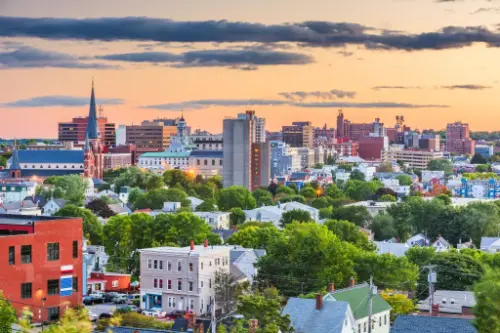 Day 45: 11:30–18:30
Portland / USA
-
Day 46: 07:00
London / Great Britain
Your World Included
With Your World Included, you’ll enjoy a wide array of included amenities for the ultimate comfort and value in ultra-premium cruising.
Unforgettable dining experiences at a variety of exquisite restaurants — all at no extra charge.
Complimentary specialty coffees, sodas, freshly pressed juices, and still and sparkling Vero Water® served throughout the ship.
Unlimited free Wi-Fi available in your suite, stateroom, and all public areas.
In-room dining with a superb variety of hot and cold selections.
Smoothies, milkshakes, gelato, and signature Humphry Slocombe ice cream — always included.
Group fitness classes at Aquamar® Spa + Vitality Center are complimentary.
Gratuities are included for your convenience.
Laundry is free for all guests.
With complimentary self-service launderettes on board, plus laundry and pressing services for Concierge and Suite categories, you’ll always look your finest.
Along with our hallmark personalized service, you’ll enjoy an enriching cruise experience with no hidden costs or nickel-and-diming.
Elevate Your Experience
Concierge Level Veranda Staterooms offer an unrivaled combination of luxury, privilege, and value. A wealth of amenities and exclusive benefits elevate your experience to the sublime — from in-room dining selections from The Grand Dining Room and complimentary laundry services to unlimited access to the Aquamar Spa Terrace.
On board Oceania Marina and Oceania Riviera, you’ll also enjoy the services of a dedicated Concierge and exclusive access to the private Concierge Lounge.
Located in the most desired areas of the ship, Concierge Level Veranda Staterooms are far more than just staterooms — they are an experience in themselves.
Concierge Level Veranda — Exclusive Privileges
Expanded in-room dining menu for lunch and dinner from The Grand Dining Room
Laundry service — up to 3 bags per stateroom
Exclusive key-card access to the private Concierge Lounge aboard Oceania Marina, Oceania Riviera, Oceania Vista, and Oceania Allura, featuring complimentary beverages, coffees, snacks, and the services of a dedicated Concierge
Welcome bottle of fine Italian Prosecco
Priority online reservations for specialty restaurants
Unlimited access to the Aquamar Spa Terrace
Oceania Cruises logo tote bag
Cashmere lap blankets — perfect for relaxing or snuggling
Pressing of garments upon embarkation
Complimentary shoeshine service
As of 01.11.2026
Deposit and Payments – Oceania Cruises
General Deposit:
For Owner’s, Vista, and Oceania Suites, a deposit of 20% of the cruise fare per person is required.
For all other suite/stateroom categories, the deposit is $500 per person.
For Grand Voyages, the deposit is $1,500 per person.
Deposit and Final Payment Deadlines:
Bookings more than 150 days from sailing:
Deposit 20% for Owner’s, Vista, and Oceania Suites and $500 for all other categories is required within 5 days of booking.
Bookings 90–120 days from sailing:
Full payment required within 3 days of booking.
Bookings 0–90 days from sailing:
Full payment due on the day of booking.
Important:
Bookings that are not deposited or paid in full according to this schedule will be automatically cancelled.
Unless otherwise noted, final payment must be received by Oceania Cruises 150 days prior to departure for cruises less than 15 days, and 150 days for cruises 15 days or longer.
Oceania Cruises reserves the right to cancel any booking not fully paid at the time of final payment.
Additional Information:
Passport details and special onboard service requests are due at final payment.
Payment may be made by personal check, American Express, Discover, MasterCard, or Visa.
For convenience, final payment may be automatically charged to the credit card used for the initial deposit.
Oceania Cruises is not responsible for foreign currency or transaction fees independently charged by issuing banks. These fees do not benefit Oceania Cruises.
Third-party credit card payments are accepted only with valid authorization from the cardholder.
Deposit and Payment – 180-Day Voyages
For 180-day voyages, a deposit of 20% of the cruise fare per person for all suites and staterooms is required within 7 days of booking.
Final payment must be received no later than 181 days prior to departure, along with passport details and any special onboard service requests.
Otherwise, the booking may be immediately cancelled, and applicable penalties will apply.
Form of Payment (FORM OF PAYMENT)
Oceania Cruises accepts payment for reservations by credit/debit card or bank transfer.
Unfortunately, personal checks are not accepted.
Credit/Debit Cards:
American Express, Visa, and Mastercard are accepted.
Please note: Oceania Cruises assumes no responsibility for foreign currency/transaction processing fees assessed by your issuing bank.
Frequently asked questions
We recommend flying in the day before the cruise begins.
- Arrive at the port 2–3 hours before departure.
- When booking an airport–port transfer, allow at least 5 hours between landing and the scheduled sailing.
Still have a question?
We'll help you choose a cruise and answer your questions.