
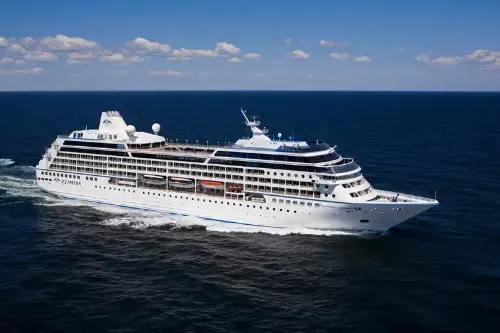
Sea cruise · 26.06.2026 – 05.07.2026 · 9 nights
9 nights, from Lisbon
Route and cruise information
Premium| Date | Port | Arrival | Departure |
|---|---|---|---|
| 26.06.2026 |
Lisbon
Portugal
|
— | 18:00 |
| 27.06.2026 |
Porto
Portugal
|
08:00 | 18:00 |
| 28.06.2026 |
Ferrol
Spain
|
11:00 | 20:00 |
| 29.06.2026 |
Day at sea
|
— | — |
| 30.06.2026 |
Saint-Malo
France
|
07:30 | 18:00 |
| 01.07.2026 |
Honfleur
France
|
07:30 | 18:00 |
| 02.07.2026 |
Dover
Great Britain
|
08:00 | 22:00 |
| 03.07.2026 |
Bruges
Belgium
|
08:00 | 20:00 |
| 04.07.2026 |
Amsterdam
Netherlands
|
08:00 | 17:00 |
| 05.07.2026 |
Hamburg
Germany
|
13:30 | — |
-
 Day 1: 18:00
Lisbon / Portugal
Lisbon is the capital and the largest city of Portugal, with an estimated population of 505,526 within its administrative limits in an area of 100.05 km2. Its urban area extends beyond the city's administrative limits with a population of around 2.8 million people, being the 11th-most populous urban area in the European Union. About 3 million people live in the Lisbon Metropolitan Area (which represents approximately 27% of the country's population). It is mainland Europe's westernmost capital city and the only one along the Atlantic coast. Lisbon lies in the western Iberian Peninsula on the Atlantic Ocean and the River Tagus. The westernmost areas of its metro area form the westernmost point of Continental Europe, which is known as Cabo da Roca, located in the Sintra Mountains.
-
 Day 2: 08:00–18:00
Porto / Portugal
Порту является вторым по величине городом Португалии после Лиссабона и одним из крупных городских районов Пиренейского полуострова. Население самого города составляет 237 591 человек, а в столичном районе Порту, который выходит за административные пределы города, проживает 1,9 миллиона человек (2011 год) на площади 2 395 км2 (925 кв. Миль), что делает его вторым самый большой городской район в Португалии. Он признан глобальным городом гамма-уровня Исследовательской группой по глобализации и глобальным городам (GaWC), единственным португальским городом, кроме Лиссабона, который был признан глобальным городом.
Расположенный вдоль устья реки Дору на севере Португалии, Порту является одним из старейших европейских центров, и его историческое ядро было объявлено ЮНЕСКО объектом Всемирного наследия в 1996 году. Западная часть его городской территории простирается до береговой линии Атлантического океана. Его поселение датируется много веков, когда он был форпостом Римской империи. Его объединенное кельтско-латинское имя, Portus Cale, было названо происхождением названия «Португалия», основанного на транслитерации и устной эволюции от латыни. На португальском языке название города пишется с определенной статьей о Порту ; следовательно, его английское название произошло от неправильного толкования устного произношения и упоминается как Опорто в современной литературе и многими ораторами.
-
 Day 3: 11:00–20:00
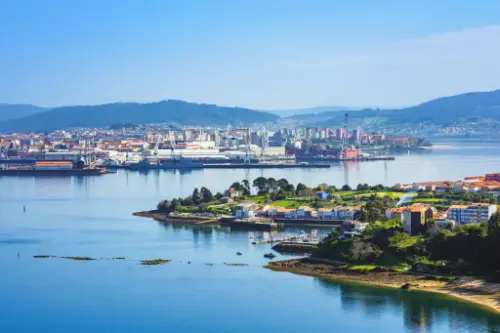
Ferrol / Spain
-
Day 4:
Day at sea / Sea
-
 Day 5: 07:30–18:00
Saint-Malo / France
The sea breeze and the cries of seagulls accompany you in Saint-Malo, a city on the Brittany coast that has preserved its spirit of maritime adventure and independence. Here, high fortress walls embrace narrow streets, while cobblestone paths lead you to cozy cafes overlooking the ocean. The history of pirates and sailors comes alive as you walk along the ramparts, watch the tides transform the coastline, or take a boat to visit the famous Grand Bé island, where the writer Chateaubriand is buried.
In Saint-Malo, you can enjoy fresh seafood in local restaurants, taste oysters harvested from nearby waters, or simply have a picnic on the sandy beaches revealed at low tide. The city offers a sense of both coziness and freedom, blending picturesque architecture with the energy of the Atlantic, while the sea breeze and salty air remind you that here, history and nature always walk beside you.
-
 Day 6: 07:30–18:00
Honfleur / France
Honfleur is a commune in the Calvados department in northwestern France. It is located on the southern bank of the estuary of the Seine across from le Havre and very close to the exit of the Pont de Normandie. Its inhabitants are called Honfleurais.
It is especially known for its old, beautiful picturesque port, characterized by its houses with slate-covered frontages, painted many times by artists, including in particular Gustave Courbet, Eugène Boudin, Claude Monet and Johan Jongkind, forming the école de Honfleur (Honfleur school) which contributed to the appearance of the Impressionistmovement. The Sainte-Catherine church, which has a bell tower separate from the principal building, is the largest church made out of wood in France.
-
 Day 7: 08:00–22:00
Dover / Great Britain
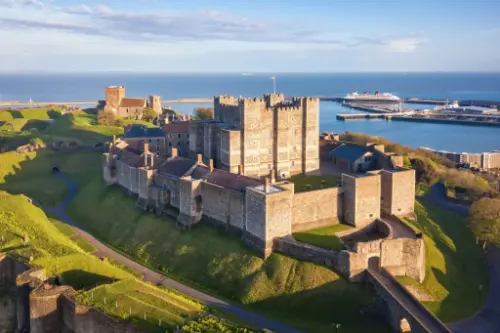
Dover is a major ferry port in Kent, South East England. It faces France across the Strait of Dover, the narrowest part of the English Channel, and lies south-east of Canterbury and east of Maidstone. The town is the administrative centre of the Dover District and home of the Dover Calais ferry through the Port of Dover. The surrounding chalk cliffs are known as the White Cliffs of Dover.
Archaeological finds have revealed that the area has always been a focus for peoples entering and leaving Britain. The name derives from the River Dour that flows through it.
The Port of Dover provides much of the town's employment, as does tourism.
-
 Day 8: 08:00–20:00
Bruges / Belgium
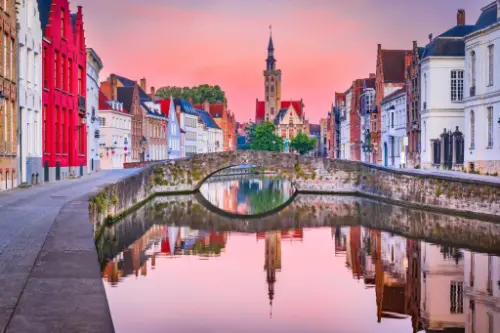
Bruges is the capital and largest city of the province of West Flanders in the Flemish Region of Belgium, in the northwest of the country.
The area of the whole city amounts to more than 13,840 hectares (138.4 sq km; 53.44 sq miles), including 1,075 hectares off the coast, at Zeebrugge (from Brugge aan zee, meaning "Bruges by the Sea"). The historic city centre is a prominent World Heritage Site of UNESCO. It is oval in shape and about 430 hectares in size. The city's total population is 117,073 (1 January 2008), of whom around 20,000 live in the city centre. The metropolitan area, including the outer commuter zone, covers an area of 616 km2 (238 sq mi) and has a total of 255,844 inhabitants as of 1 January 2008.
Along with a few other canal-based northern cities, such as Amsterdam, it is sometimes referred to as the Venice of the North. Bruges has a significant economic importance, thanks to its port, and was once one of the world's chief commercial cities. Bruges is well known as the seat of the College of Europe, a university institute for European studies.
-
 Day 9: 08:00–17:00
Amsterdam / Netherlands
Amsterdam is the capital city and most populous municipality of the Netherlands. Its status as the capital is mandated by the Constitution of the Netherlands, although it is not the seat of the government, which is The Hague. Amsterdam has a population of 851,373 within the city proper, 1,351,587 in the urban area] and 2,410,960 in the metropolitan area. The city is located in the province of North Holland in the west of the country but is not its capital, which is Haarlem. The metropolitan area comprises much of the northern part of the Randstad, one of the larger conurbations in Europe, with a population of approximately 8 million.
-
 Day 10: 13:30
Hamburg / Germany
Hamburg ; officially the Free and Hanseatic City of Hamburg is the second-largest city in Germany with a population of over 1.8 million.
One of Germany's 16 federal states, it is surrounded by Schleswig-Holstein to the north and Lower Saxony to the south. The city's metropolitan region is home to more than five million people. Hamburg lies on the River Elbe and two of its tributaries, the River Alster and the River Bille.
Frequently asked questions
We recommend flying in the day before the cruise begins.
- Arrive at the port 2–3 hours before departure.
- When booking an airport–port transfer, allow at least 5 hours between landing and the scheduled sailing.
Still have a question?
We'll help you choose a cruise and answer your questions.