| Cruise Region : Europe |
| Company : Uniworld |
| Ship : S.S. Emilie |
| Journey Start : Sat 22 Apr 2028 |
| Journey End : Tue 09 May 2028 |
| Count Nights : 17 nights |
| Day | Date | Port |
|---|---|---|
| 1 | 22.04 Sat | Bucharest / Romania |
| 2 | 23.04 Sun | Constanța / Romania |
| 3 | 24.04 Mon | Constanța / Romania |
| 4 | 25.04 Tue | HARSOVA |
| 5 | 26.04 Wed | Ruse / Bulgaria |
| 6 | 27.04 Thu | tow |
| 7 | 28.04 Fri | Golubac / Serbia |
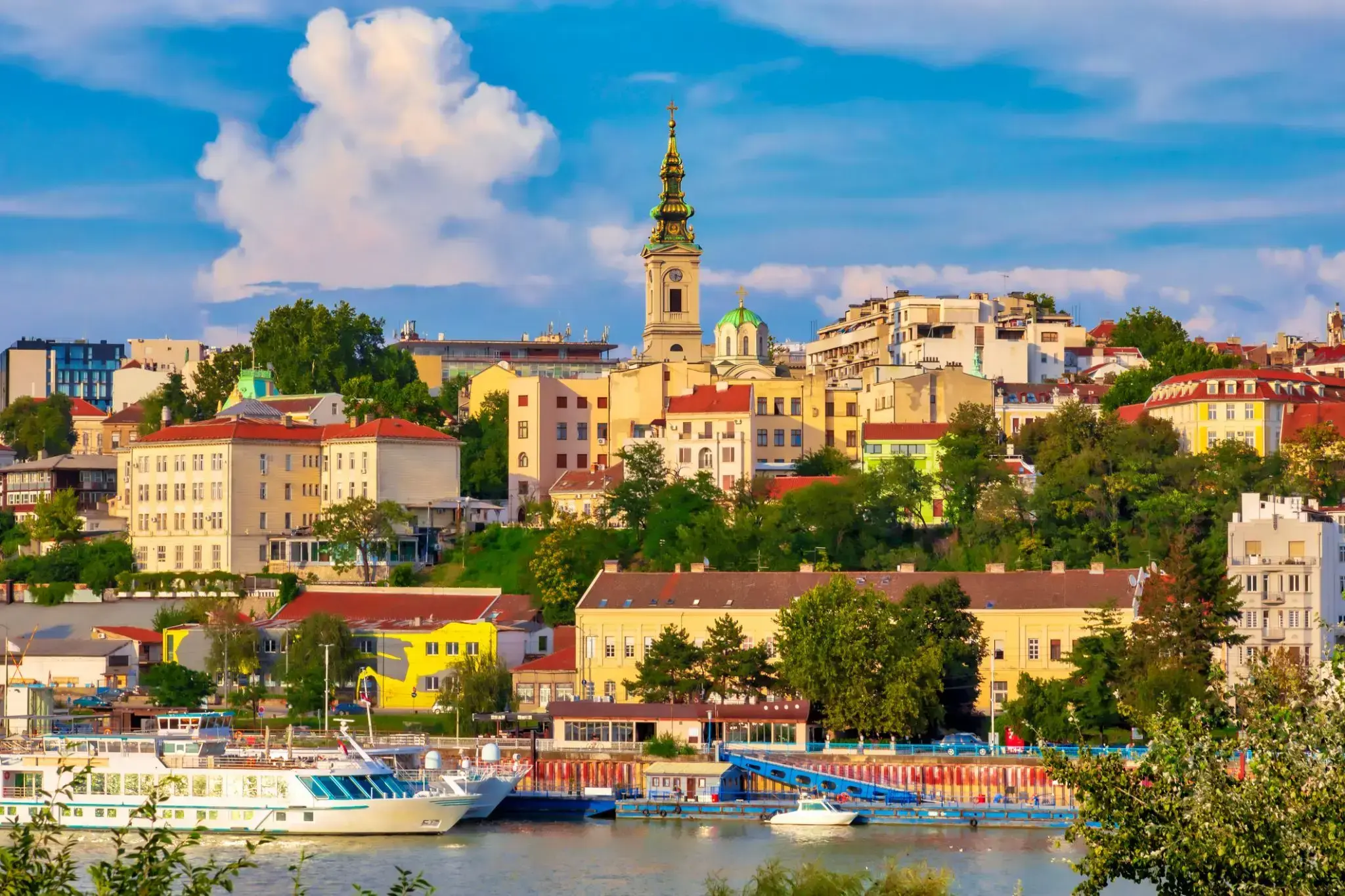
| 8 | 29.04 Sat | Belgrade / Serbia |
| 9 | 30.04 Sun | Belgrade / Serbia |
| 10 | 1.05 Mon | Belgrade / Serbia |
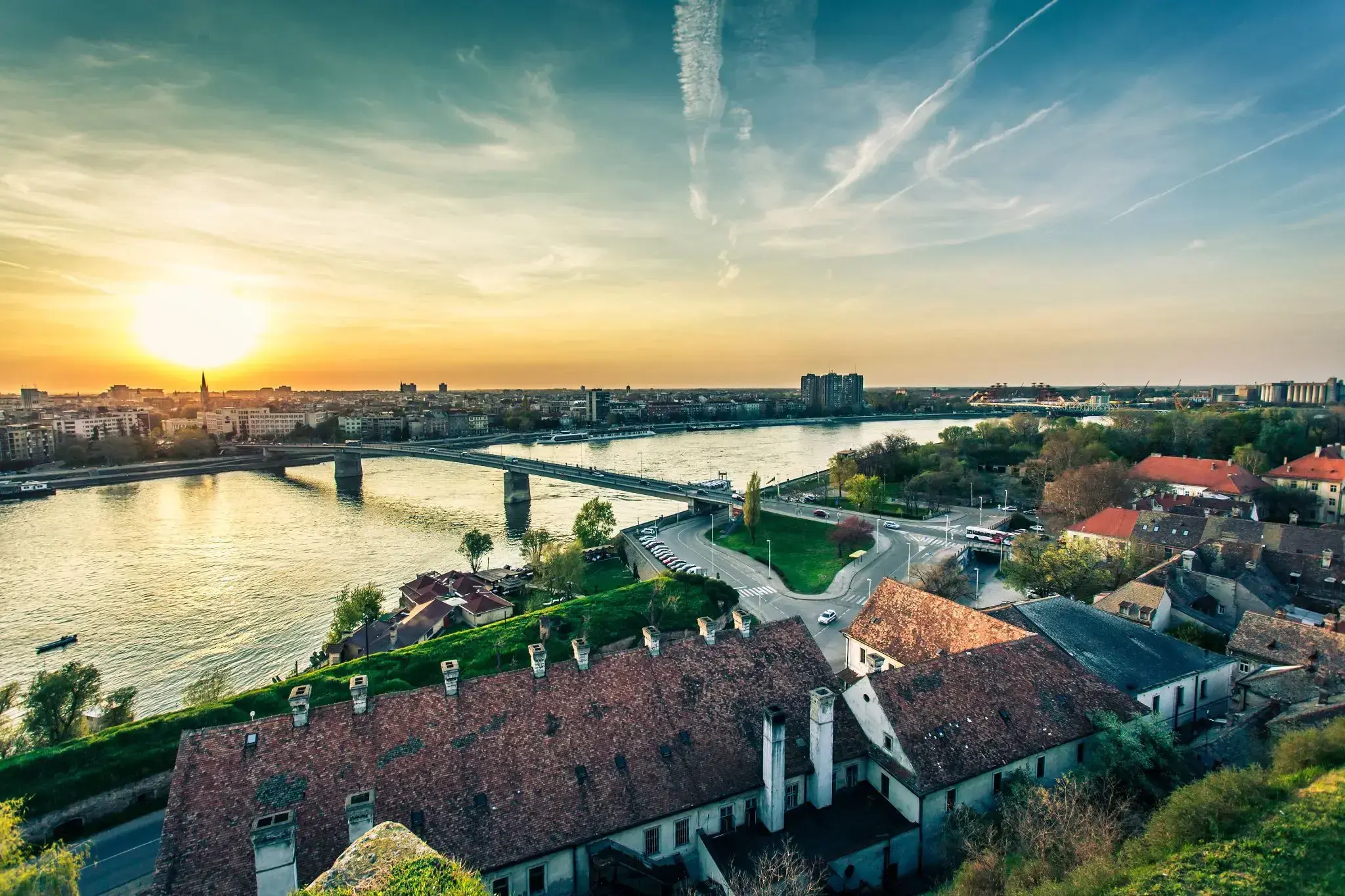
| 11 | 2.05 Tue | Novi Sad / Serbia |
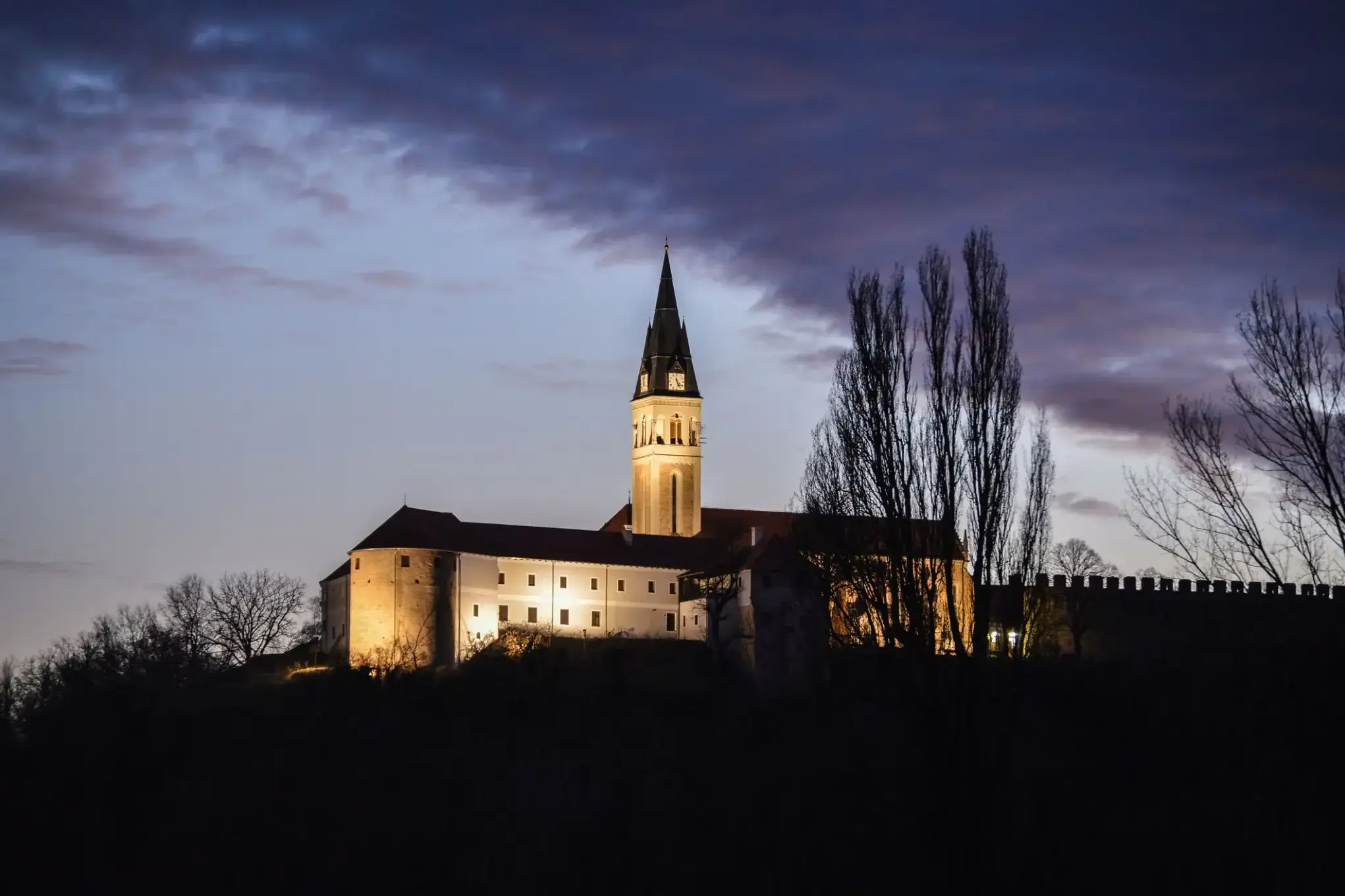
| 12 | 3.05 Wed | Ilok / Croatia |
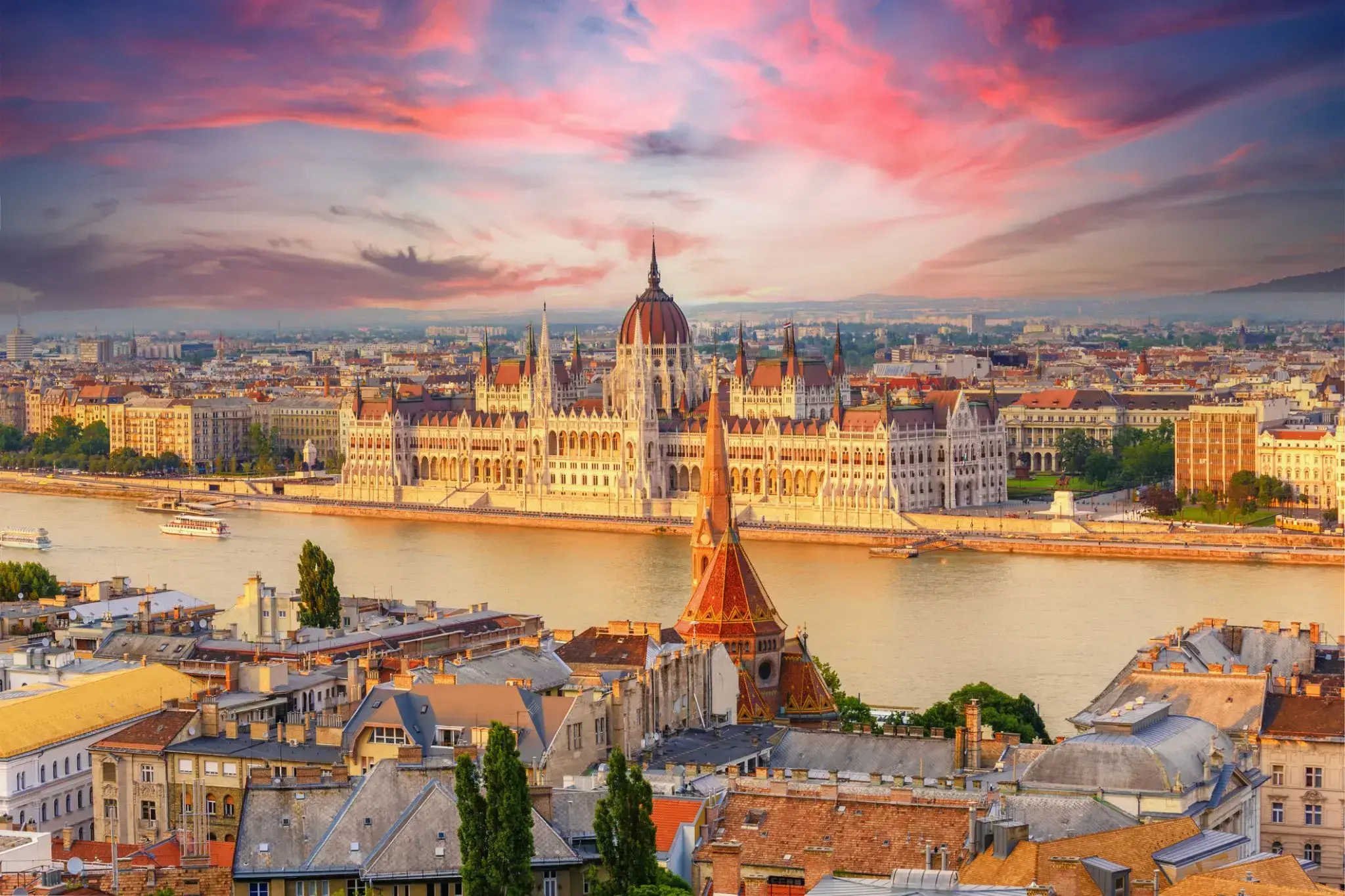
| 13 | 4.05 Thu | Budapest / Hungary |
| 14 | 5.05 Fri | Bratislava / Slovakia |
| 15 | 6.05 Sat | Vienna / Austria |
| 16 | 7.05 Sun | Vienna / Austria |
| 17 | 8.05 Mon | Vienna / Austria |
| 18 | 9.05 Tue | Vienna / Austria |
DINING
All meals onboard, prepared using the finest and freshest ingredients
Captain’s Welcome and Farewell Receptions
Welcome and Farewell Gala Dinners
Unlimited beverages onboard, including fine wine, beer, spirits, specialty coffee and tea, soft drinks, and mineral water
EXCURSIONS
all fully hosted by English-speaking local experts
Guided “Let's Go” and “Village Day” programs
State-of-the-art Quietvox portable audio-headset system on all excursions
Use of bicycles and Nordic walking sticks
ACCOMMODATIONS
Lavishly appointed riverview staterooms and suites have handcrafted Savoir® Beds of England, high thread count 100% Egyptian cotton sheets and European duvets, and a menu of pillow options
Free Wi-Fi
EXPERIENCES
Services of an experienced Uniworld Cruise Manager
Cultural enrichment, including captivating onboard local entertainment
Gratuities for onboard personnel (ship staff, crew, Cruise/Tour Manager) are included during the cruise/tour
Reservations and Payments
A deposit of at least 10% of the cruise-tour fare (cruise-tour plus port charge plus pre and or post land extensions, less applicable discounts), per person
is required at time of booking. Final payment is due at least 120 days prior to departure. For new bookings a courtesy hold of up to 72 hours is allowed
but can not extend past the final payment due date. For bookings made within 120 days of departure full payment is due at time of booking.
Reservations will be canceled if payments are not received in a timely manner.
Cancellation Notice Received Before
Cruise-Tour Start Date
Cancellation Charges Per Person
• 120 days or more $200 per person for cruise-tour*
• 119 - 90 days 20% of the fare **
• 89 - 60 days 35% of the fare **
• 59 - 30 days 50% of the fare **
• No Show 100% of the fare **
• Less than 30 days 100% of the fare **
**Fare is defined as the cost of any cruise, or land, element purchased from
Uniworld.
If air is cancelled one hundred and nineteen (119) days prior to departure or
less, the full price of your air is non-refundable. Please see Air Cancellations for
details.
These cancellation fees are in addition to any cancellation fees that might be
levied by your travel agent. There is no refund for unused services or for
unused portions of the trip.
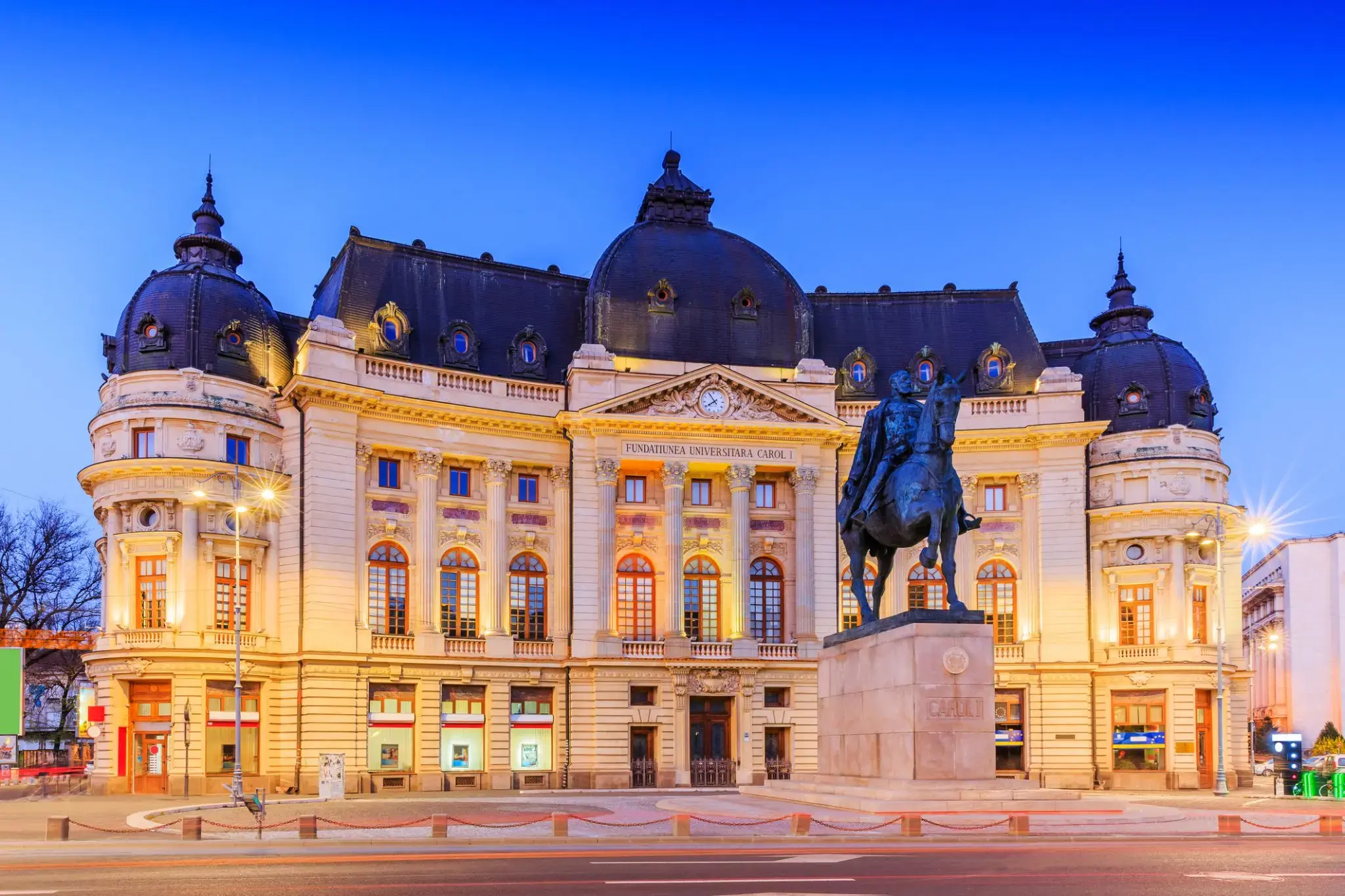
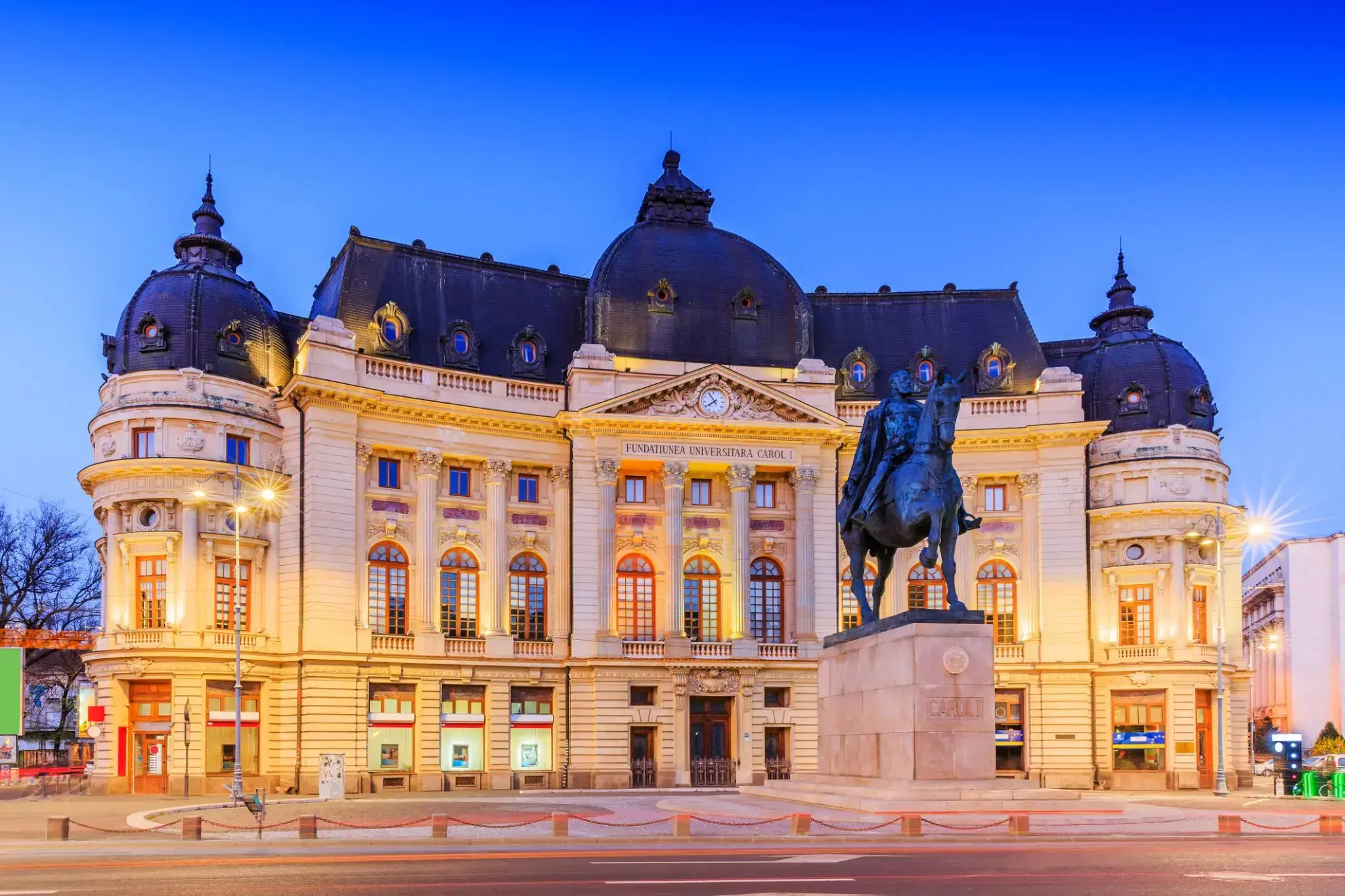
Bucharest, the vibrant capital of Romania, offers a fascinating blend of history, modernity, and culture. Whether you're strolling down the grand boulevards or exploring the narrow streets of its historic old town, the city's charm is undeniable. Highlights like the majestic Palace of the Parliament, one of the largest administrative buildings in the world, or the National Museum of Art, housed in a former royal palace, will captivate any history or art enthusiast. The city's diverse architecture—from neoclassical to communist-era buildings—creates a unique skyline that tells the story of Romania’s past and present.
Beyond its historical sites, Bucharest has a thriving arts scene and a lively nightlife. Local markets, trendy cafes, and restaurants serve up traditional Romanian dishes with a modern twist, offering visitors a taste of the country's rich culinary heritage. The city's green spaces, including Herastrau Park, provide a relaxing escape from the hustle and bustle, making Bucharest a destination for those seeking both culture and relaxation. Whether you're visiting for a weekend or a longer stay, Bucharest invites you to discover its unique mix of old-world charm and contemporary energy.
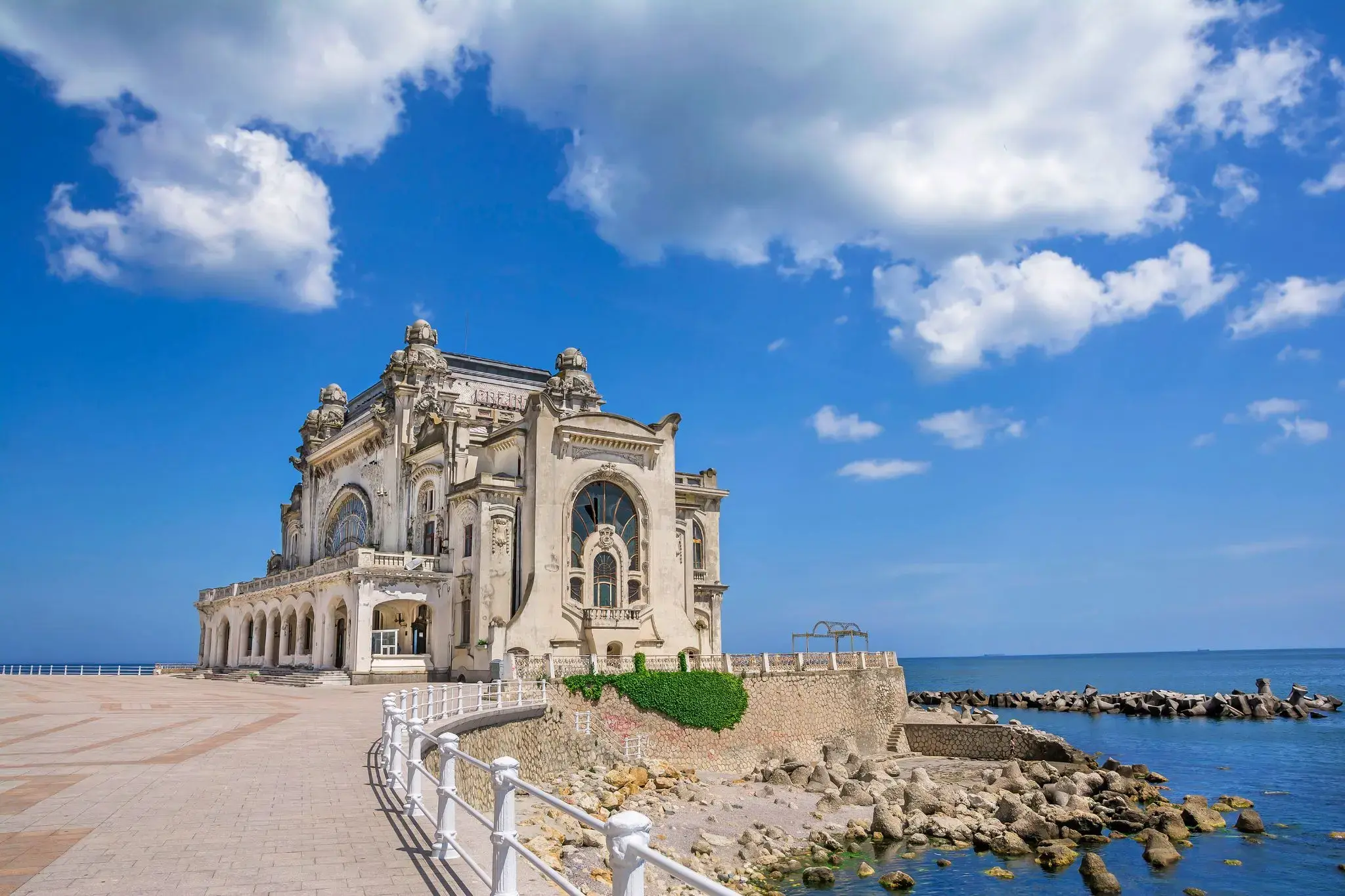
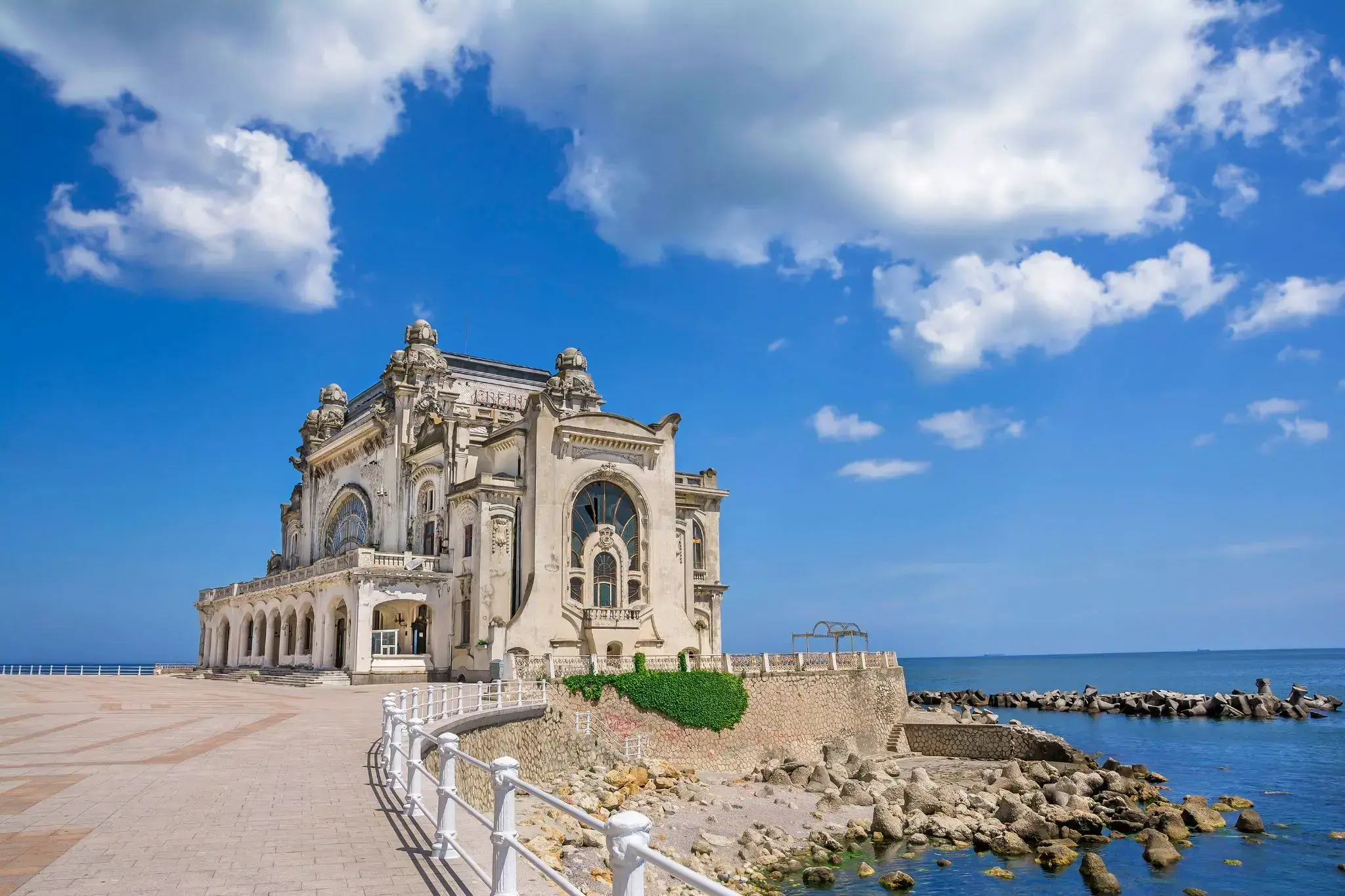
Constanța historically known as Tomis (Ancient Greek: Τόμις), is the oldest continuously inhabited city in Romania. It was founded around 600 BC. The city is located in the Dobruja region of Romania, on the Black Sea coast. It is the capital of Constanța County and the largest city in the region.
As of the 2011 census, Constanța has a population of 283,872, making it the fifth most populous city in Romania. The Constanța metropolitan area includes 14 localities within 30 km (19 mi) of the city, and with a total population of 425,916 inhabitants, it is one of the largest metropolitan areas in Romania.
The Port of Constanța has an area of 39.26 km2 (15.16 sq mi) and a length of about 30 km (19 mi). It is the largest port on the Black Sea, and one of the largest ports in Europe.
Constanța historically known as Tomis (Ancient Greek: Τόμις), is the oldest continuously inhabited city in Romania. It was founded around 600 BC. The city is located in the Dobruja region of Romania, on the Black Sea coast. It is the capital of Constanța County and the largest city in the region.
As of the 2011 census, Constanța has a population of 283,872, making it the fifth most populous city in Romania. The Constanța metropolitan area includes 14 localities within 30 km (19 mi) of the city, and with a total population of 425,916 inhabitants, it is one of the largest metropolitan areas in Romania.
The Port of Constanța has an area of 39.26 km2 (15.16 sq mi) and a length of about 30 km (19 mi). It is the largest port on the Black Sea, and one of the largest ports in Europe.

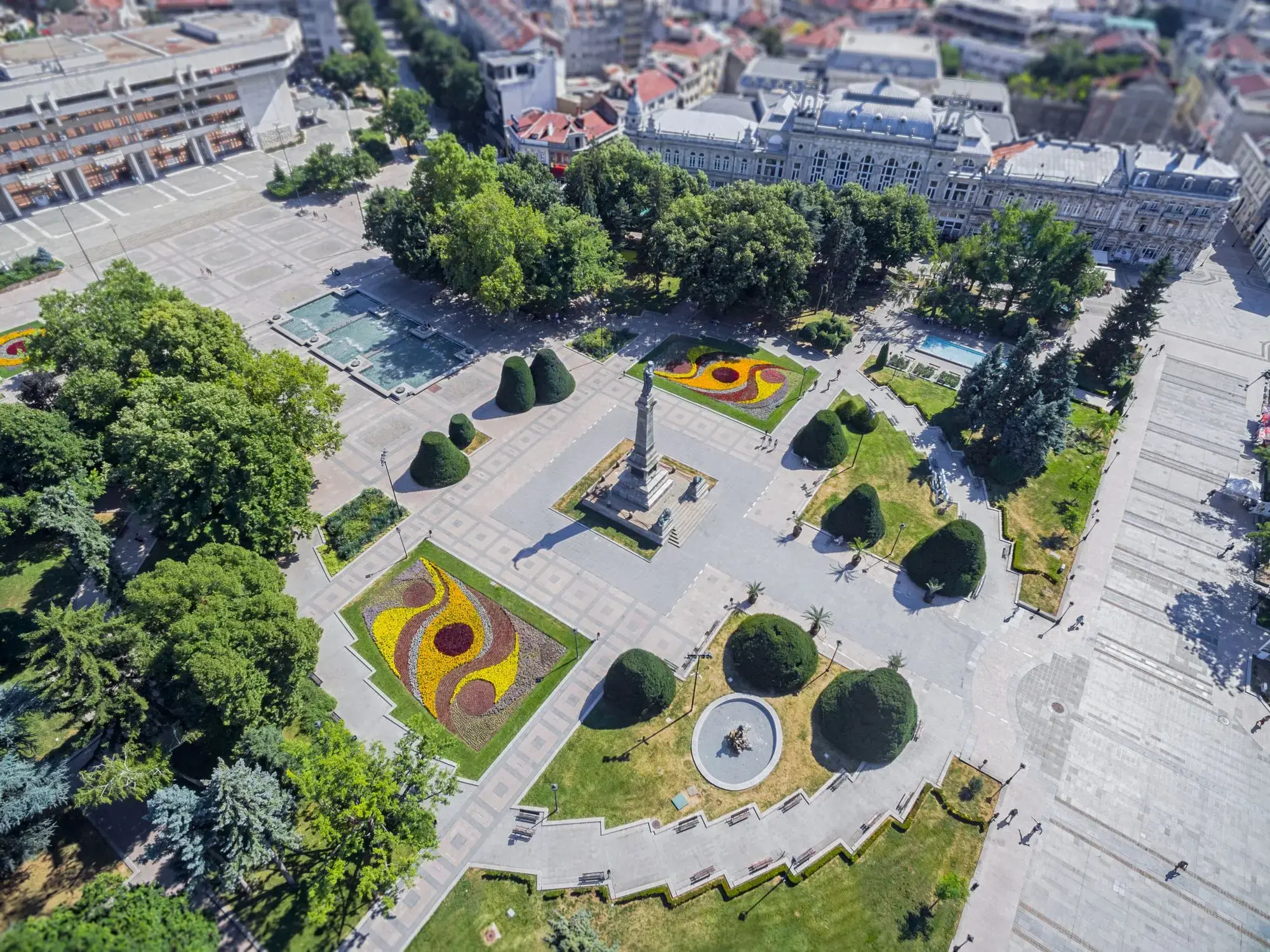
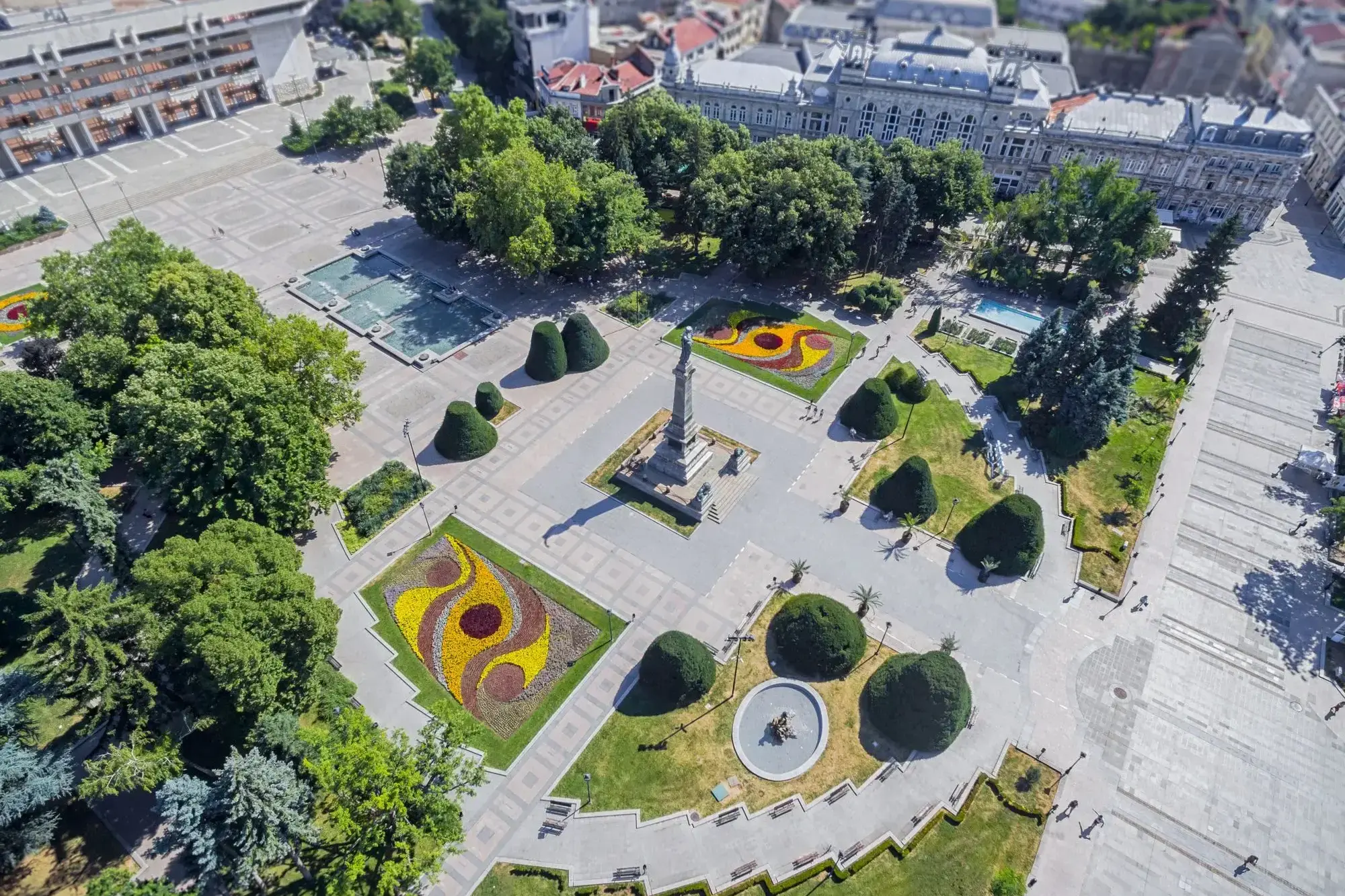
Majestic Neo-Renaissance buildings and wide boulevards with a Central European atmosphere reveal that Ruse is not just a city on the banks of the Danube but a true cultural gem of Bulgaria. Often called "Little Vienna" thanks to its elegant architecture and rich history, Ruse perfectly blends historical charm with urban sophistication.
The city enchants travelers with its museums, theatres, and a scenic riverside promenade ideal for watching river traffic. Highlights include the Pantheon of National Heroes, the Eco Museum with an aquarium, and the nearby Rusenski Lom Nature Park, perfect for nature excursions. A visit to Ruse offers a unique chance to experience the seamless blend of heritage and modernity.
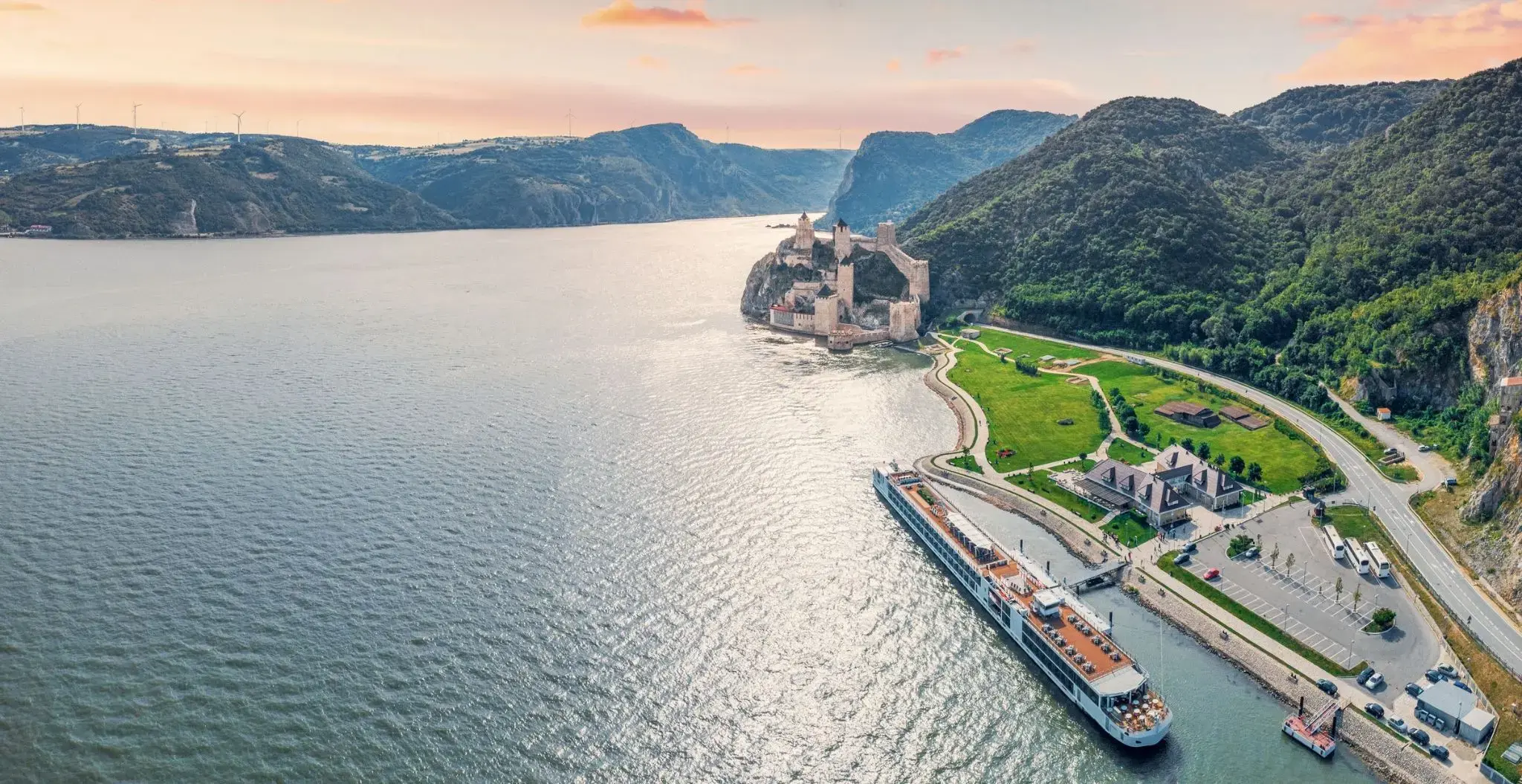
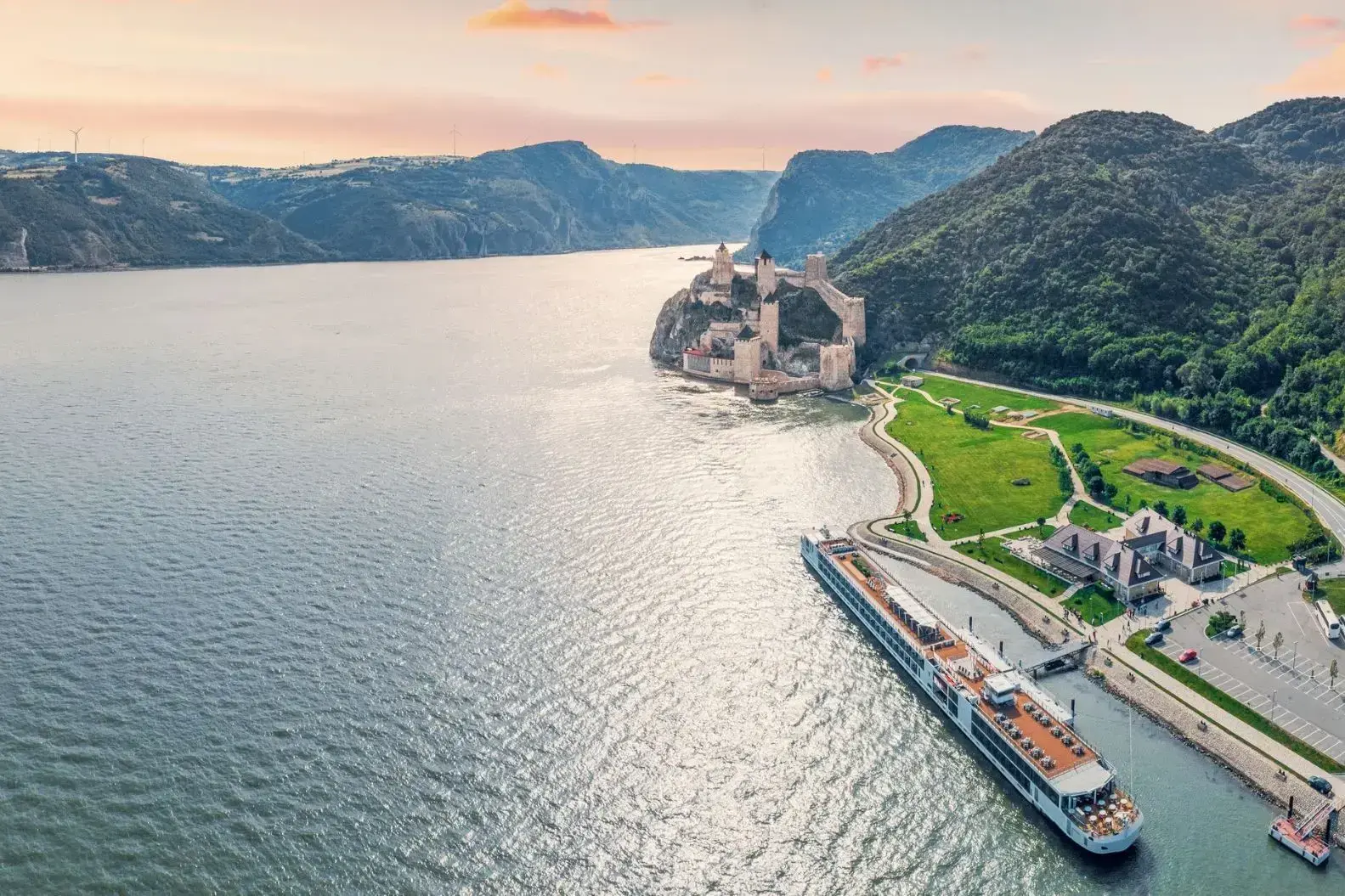
Where the Danube meets the mighty rocks of the Iron Gates, a journey through time begins among medieval fortress walls. The impressive Golubac Fortress — one of the most picturesque in Serbia — stands proudly, carefully restored and open to visitors. This majestic citadel, built in the 14th century, once guarded a key strategic passage and now offers panoramic views of the river and the Romanian mountains across the bank.
Golubac is not only about history, but also nature: it lies within the Đerdap National Park, ideal for walking, birdwatching, or cycling along the river. Cozy cafés, local cuisine, and the warm hospitality of the locals make this spot perfect for a short break or a slow, relaxed stay in the spirit of old Serbia.
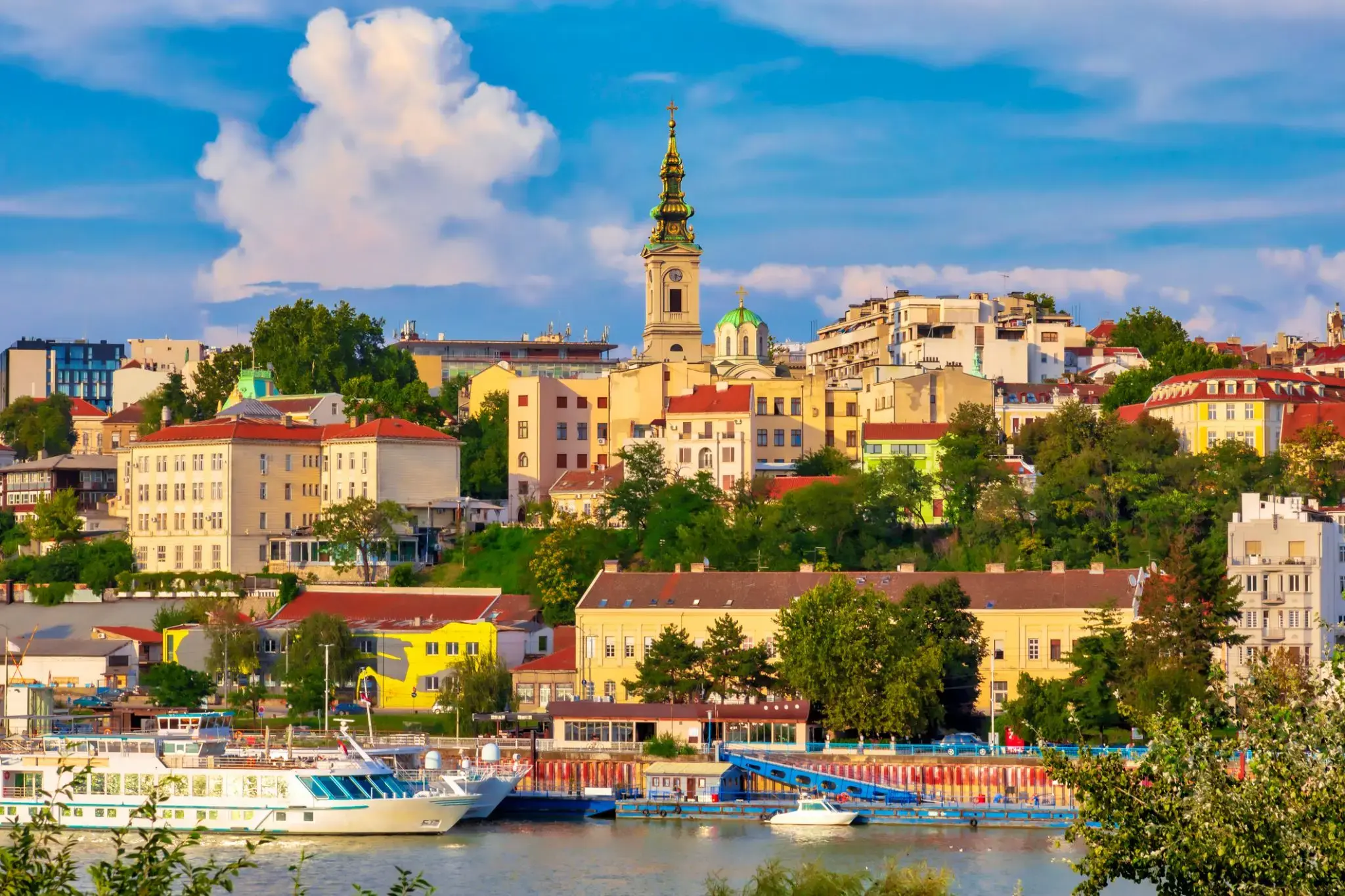
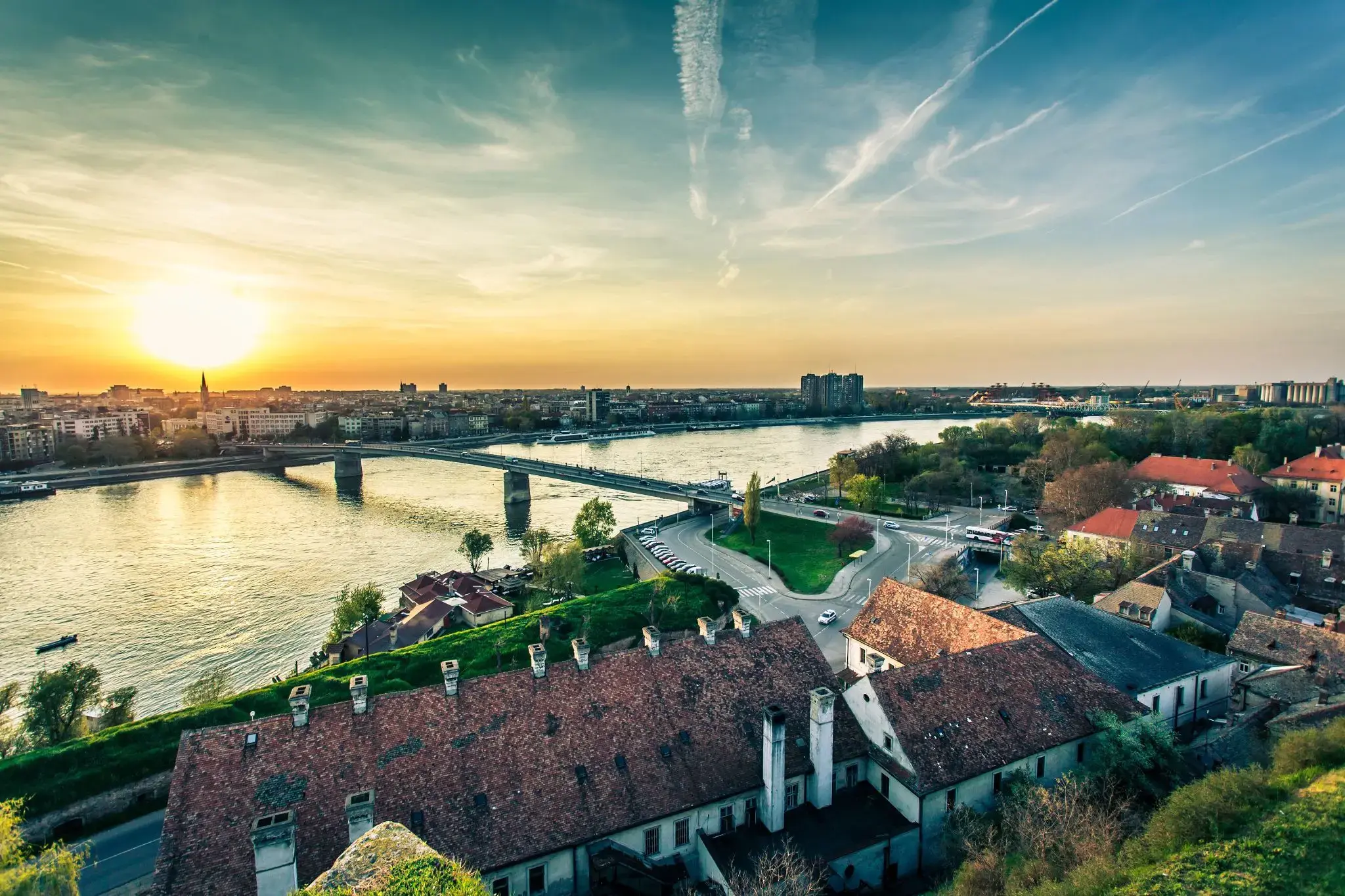
Where the Danube gently curves around ancient fortifications, Novi Sad greets travelers with its charming old streets and a relaxed bohemian atmosphere. This Serbian city, nestled at the foot of Mount Fruška Gora, is renowned for its perfect blend of history, culture, and nature. Novi Sad is not only the cultural capital of the country but also one of Serbia’s greenest cities, featuring cozy parks and panoramic river views.
Particular attention should be paid to the Petrovaradin Fortress—an imposing 18th-century structure often referred to as the "Gibraltar on the Danube." Every year, this fortress hosts the famous EXIT music festival, attracting modern music lovers from all over the world. Strolling through the center of Novi Sad, tourists discover Hungarian, Austrian, and Balkan heritage reflected in the architecture, gastronomy, and the warm hospitality of the locals.
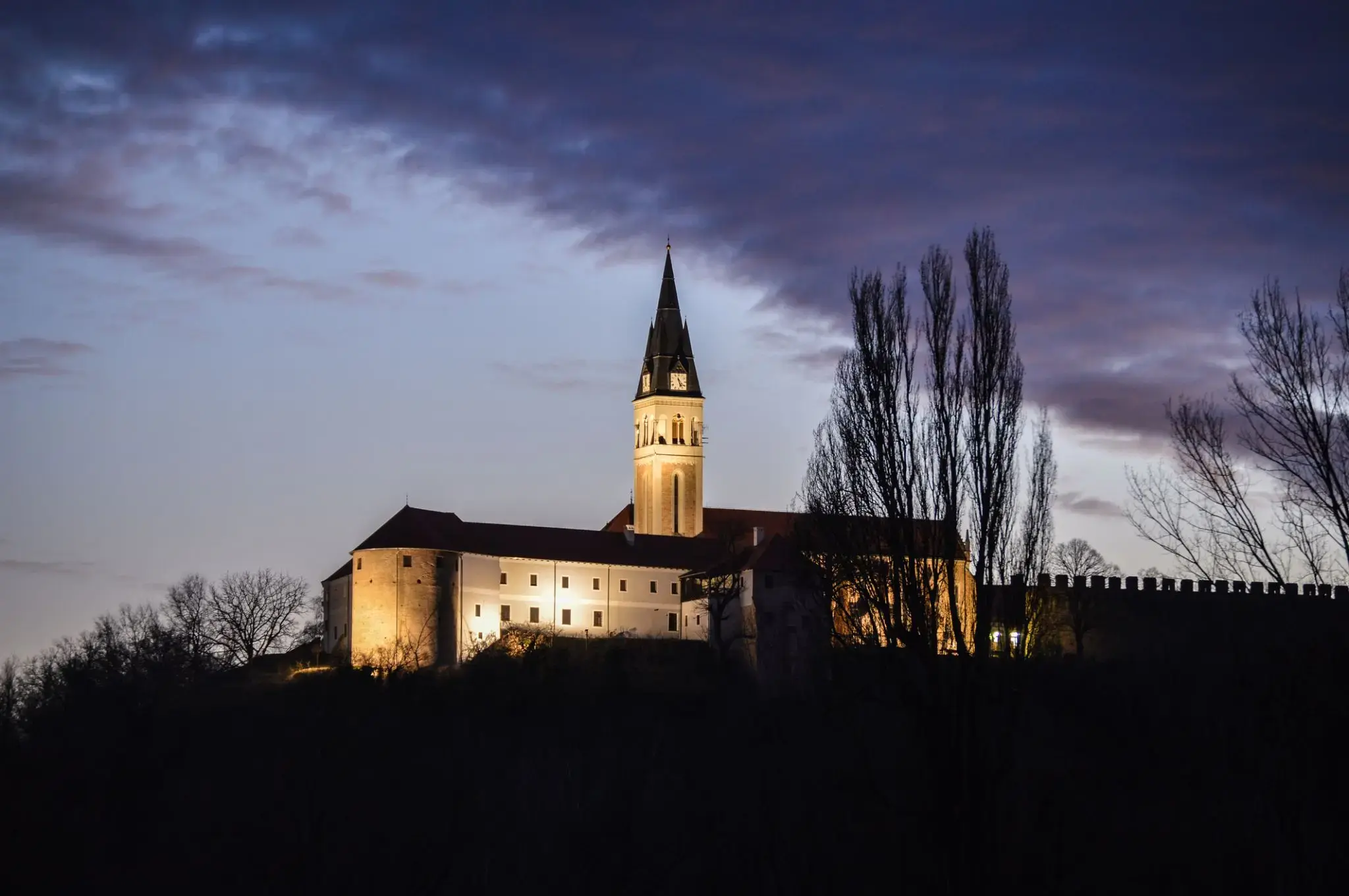
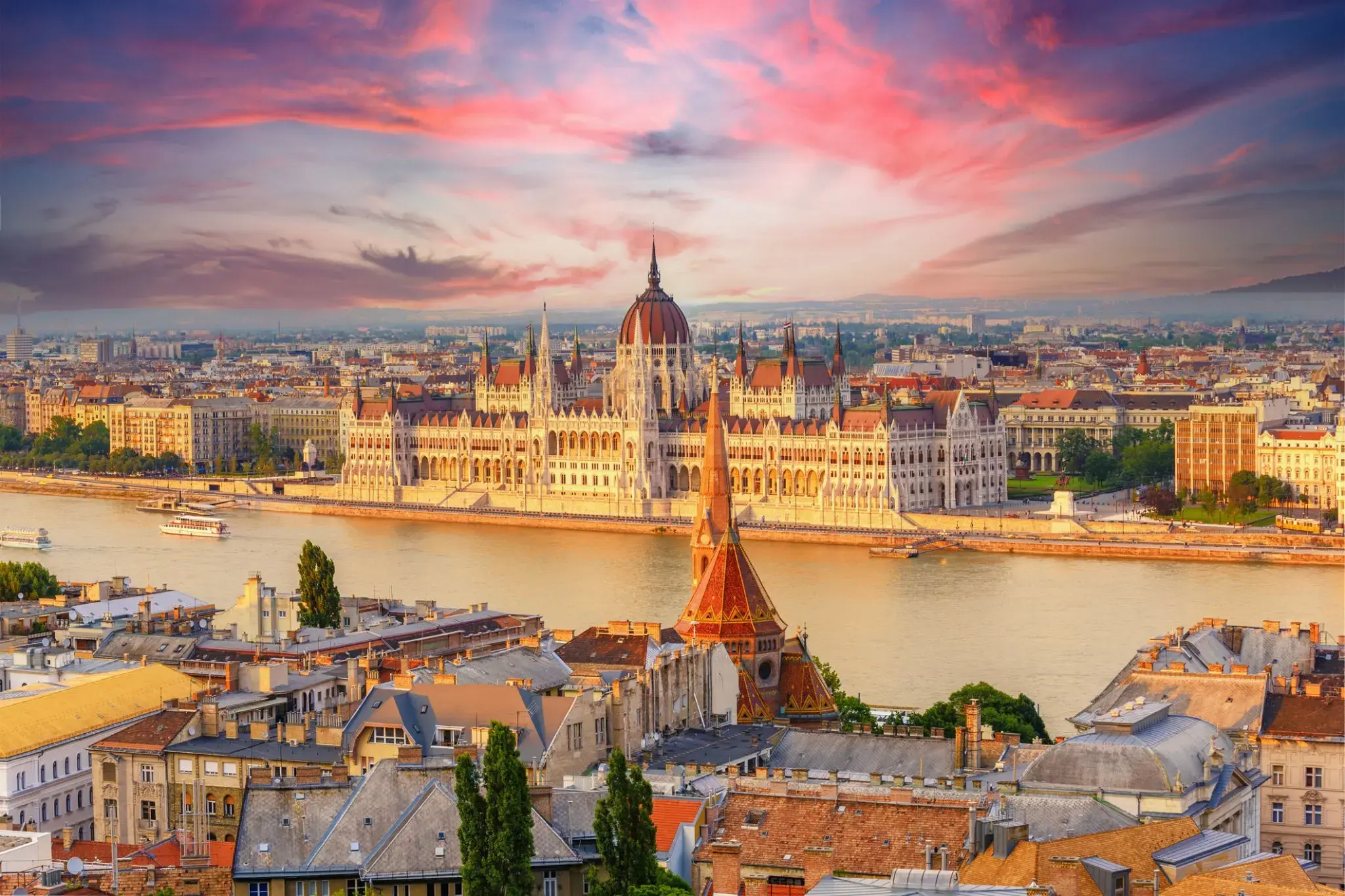
the capital of Hungary, in the northern central part of the country; population 1,712,210 (2009). It was formed in 1873 by the union of the city of Buda on the right bank of the Danube River with the city of Pest on the left.
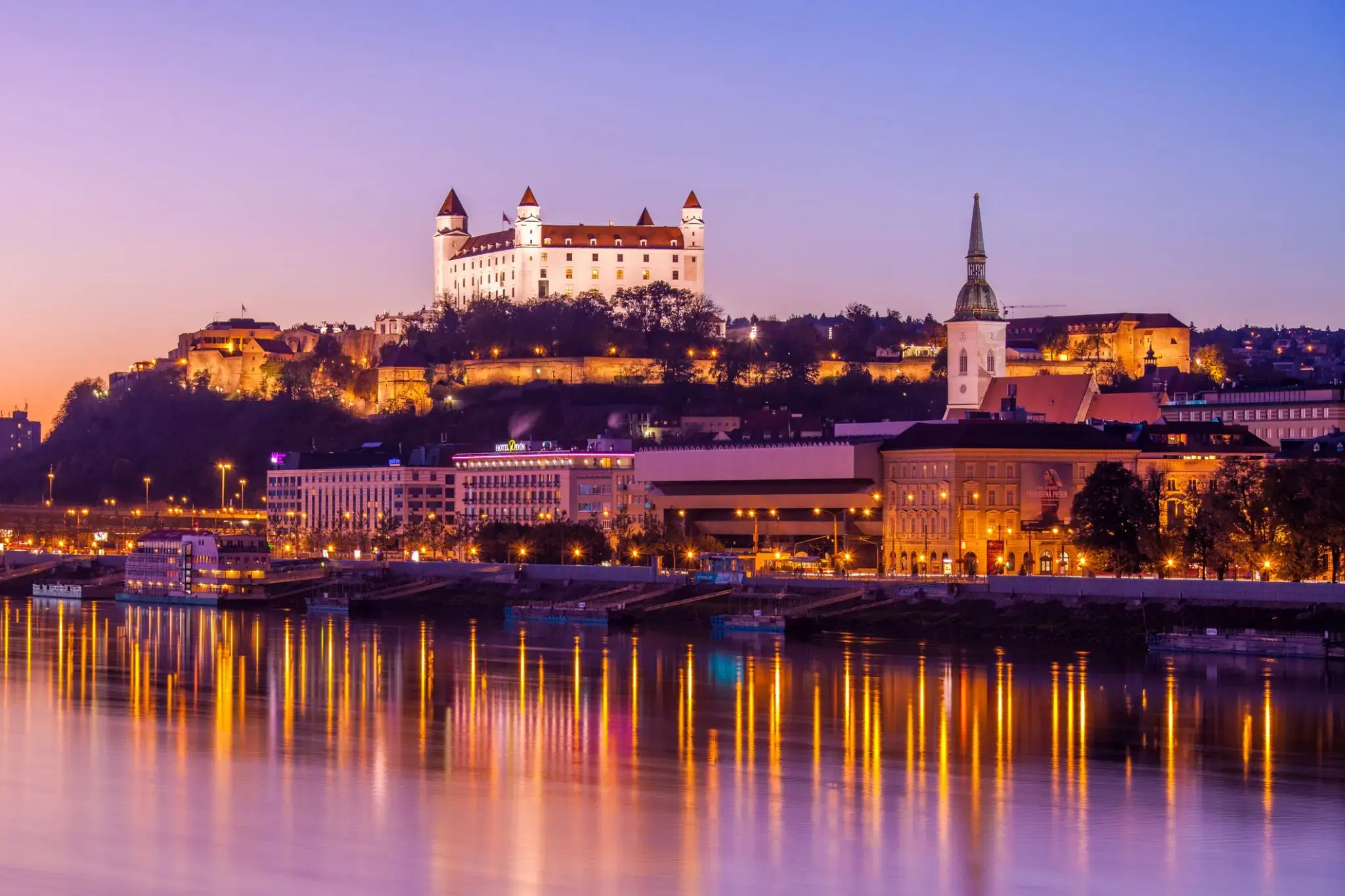
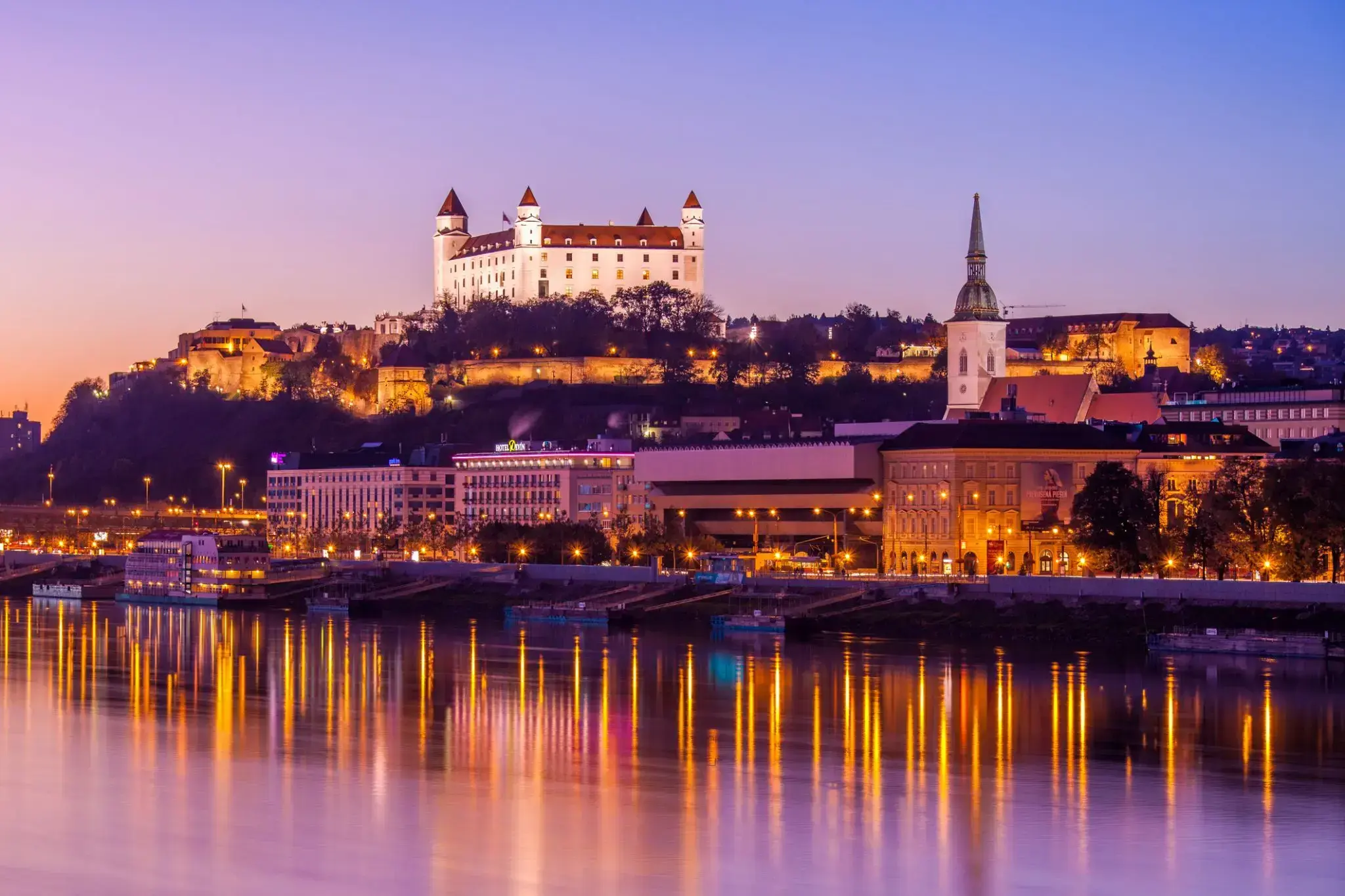
Bratislava is the capital of Slovakia. With a population of about 425,000, it is one of the smaller capitals of Europe but still the country's largest city. The greater metropolitan area is home to more than 650,000 people. Bratislava is in southwestern Slovakia, occupying both banks of the River Danube and the left bank of the River Morava. Bordering Austria and Hungary, it is the only national capital that borders two sovereign states.
The city's history has been strongly influenced by people of different nations and religions, namely (in alphabetical order) Austrians, Bulgarians, Croats, Czechs, Germans, Hungarians, Jews, Serbs and Slovaks. It was the coronation site and legislative center of the Kingdom of Hungary from 1536 to 1783, and has been home to many Slovak, Hungarian and German historical figures.
Bratislava is the political, cultural and economic centre of Slovakia. It is the seat of the Slovak president, the parliamentand the Slovak Executive. It has several universities, and many museums, theatres, galleries and other cultural and educational institutions. Many of Slovakia's large businesses and financial institutions have headquarters there.
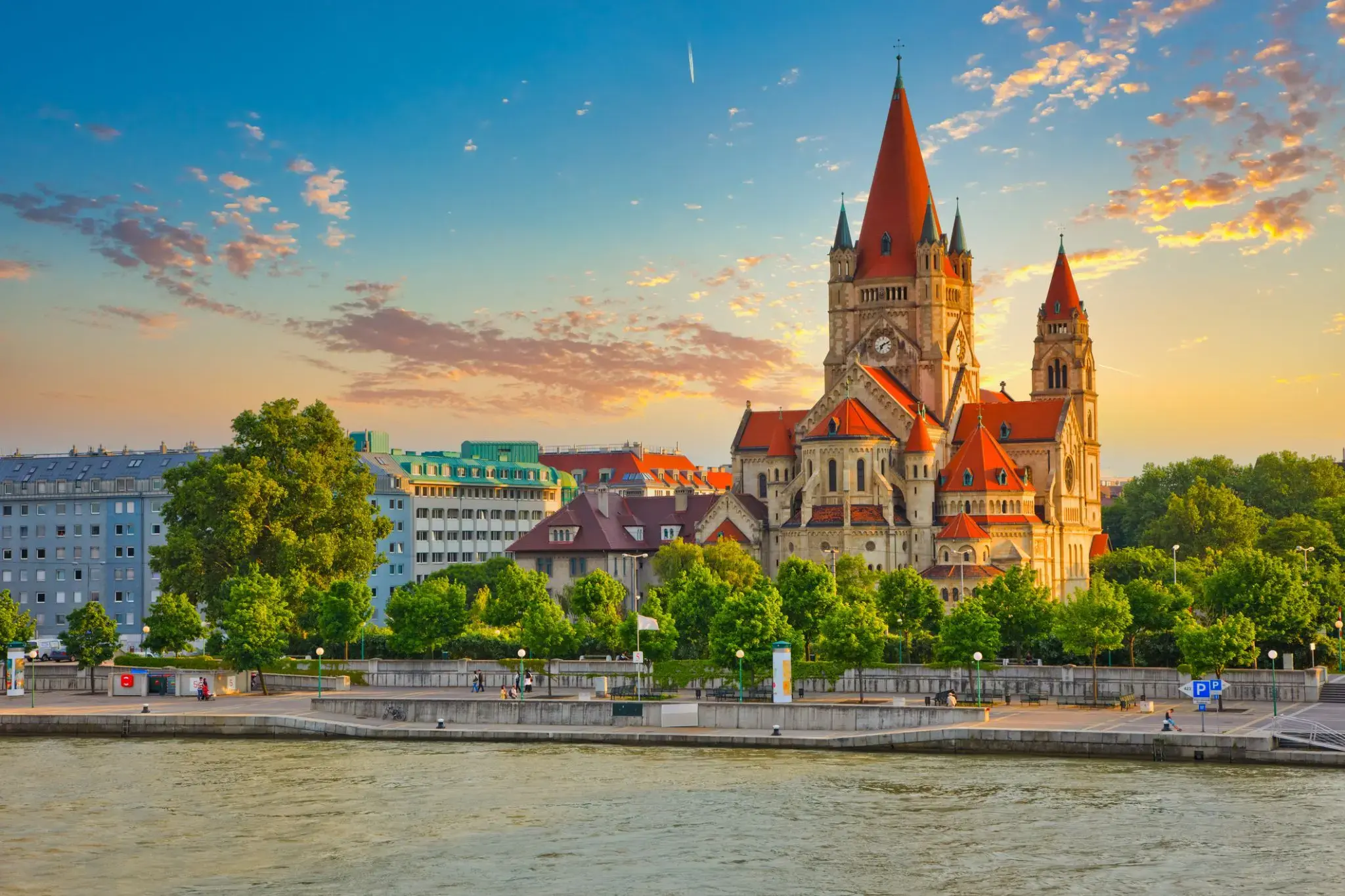
Vienna is the federal capital and largest city of Austria, and one of the nine states of Austria. Vienna is Austria's primate city, with a population of about 1.9 million (2.6 million within the metropolitan area, nearly one third of Austria's population), and its cultural, economic, and political centre. It is the 7th-largest city by population within city limits in the European Union. Until the beginning of the 20th century, it was the largest German-speaking city in the world, and before the splitting of the Austro-Hungarian Empire in World War I, the city had 2 million inhabitants. Today, it has the second largest number of German speakers after Berlin.Vienna is host to many major international organizations, including the United Nations and OPEC. The city is located in the eastern part of Austria and is close to the borders of the Czech Republic, Slovakia, and Hungary. These regions work together in a European Centrope border region. Along with nearby Bratislava, Vienna forms a metropolitan region with 3 million inhabitants. In 2001, the city centre was designated a UNESCO World Heritage Site. In July 2017 it was moved to the list of World Heritage in Danger.
Apart from being regarded as the City of Music[ because of its musical legacy, Vienna is also said to be "The City of Dreams" because it was home to the world's first psychoanalyst – Sigmund Freud. The city's roots lie in early Celticand Roman settlements that transformed into a Medieval and Baroque city, and then the capital of the Austro-Hungarian Empire. It is well known for having played an essential role as a leading European music centre, from the great age of Viennese Classicism through the early part of the 20th century. The historic centre of Vienna is rich in architectural ensembles, including Baroque castles and gardens, and the late-19th-century Ringstraße lined with grand buildings, monuments and parks.
Vienna is known for its high quality of life. In a 2005 study of 127 world cities, the Economist Intelligence Unit ranked the city first (in a tie with Vancouver and San Francisco) for the world's most liveable cities. Between 2011 and 2015, Vienna was ranked second, behind Melbourne. In 2018, it replaced Melbourne as the number one spot. For eight consecutive years (2009–2016), the human-resource-consulting firm Mercer ranked Vienna first in its annual "Quality of Living" survey of hundreds of cities around the world, a title the city still held in 2016. Monocle's 2015 "Quality of Life Survey" ranked Vienna second on a list of the top 25 cities in the world "to make a base within."
The UN-Habitat classified Vienna as the most prosperous city in the world in 2012/2013. The city was ranked 1st globally for its culture of innovation in 2007 and 2008, and sixth globally (out of 256 cities) in the 2014 Innovation Cities Index, which analyzed 162 indicators in covering three areas: culture, infrastructure, and markets. Vienna regularly hosts urban planning conferences and is often used as a case study by urban planners.
Between 2005 and 2010, Vienna was the world's number-one destination for international congresses and conventions. It attracts over 6.8 million tourists a year.
Vienna is the federal capital and largest city of Austria, and one of the nine states of Austria. Vienna is Austria's primate city, with a population of about 1.9 million (2.6 million within the metropolitan area, nearly one third of Austria's population), and its cultural, economic, and political centre. It is the 7th-largest city by population within city limits in the European Union. Until the beginning of the 20th century, it was the largest German-speaking city in the world, and before the splitting of the Austro-Hungarian Empire in World War I, the city had 2 million inhabitants. Today, it has the second largest number of German speakers after Berlin.Vienna is host to many major international organizations, including the United Nations and OPEC. The city is located in the eastern part of Austria and is close to the borders of the Czech Republic, Slovakia, and Hungary. These regions work together in a European Centrope border region. Along with nearby Bratislava, Vienna forms a metropolitan region with 3 million inhabitants. In 2001, the city centre was designated a UNESCO World Heritage Site. In July 2017 it was moved to the list of World Heritage in Danger.
Apart from being regarded as the City of Music[ because of its musical legacy, Vienna is also said to be "The City of Dreams" because it was home to the world's first psychoanalyst – Sigmund Freud. The city's roots lie in early Celticand Roman settlements that transformed into a Medieval and Baroque city, and then the capital of the Austro-Hungarian Empire. It is well known for having played an essential role as a leading European music centre, from the great age of Viennese Classicism through the early part of the 20th century. The historic centre of Vienna is rich in architectural ensembles, including Baroque castles and gardens, and the late-19th-century Ringstraße lined with grand buildings, monuments and parks.
Vienna is known for its high quality of life. In a 2005 study of 127 world cities, the Economist Intelligence Unit ranked the city first (in a tie with Vancouver and San Francisco) for the world's most liveable cities. Between 2011 and 2015, Vienna was ranked second, behind Melbourne. In 2018, it replaced Melbourne as the number one spot. For eight consecutive years (2009–2016), the human-resource-consulting firm Mercer ranked Vienna first in its annual "Quality of Living" survey of hundreds of cities around the world, a title the city still held in 2016. Monocle's 2015 "Quality of Life Survey" ranked Vienna second on a list of the top 25 cities in the world "to make a base within."
The UN-Habitat classified Vienna as the most prosperous city in the world in 2012/2013. The city was ranked 1st globally for its culture of innovation in 2007 and 2008, and sixth globally (out of 256 cities) in the 2014 Innovation Cities Index, which analyzed 162 indicators in covering three areas: culture, infrastructure, and markets. Vienna regularly hosts urban planning conferences and is often used as a case study by urban planners.
Between 2005 and 2010, Vienna was the world's number-one destination for international congresses and conventions. It attracts over 6.8 million tourists a year.
Vienna is the federal capital and largest city of Austria, and one of the nine states of Austria. Vienna is Austria's primate city, with a population of about 1.9 million (2.6 million within the metropolitan area, nearly one third of Austria's population), and its cultural, economic, and political centre. It is the 7th-largest city by population within city limits in the European Union. Until the beginning of the 20th century, it was the largest German-speaking city in the world, and before the splitting of the Austro-Hungarian Empire in World War I, the city had 2 million inhabitants. Today, it has the second largest number of German speakers after Berlin.Vienna is host to many major international organizations, including the United Nations and OPEC. The city is located in the eastern part of Austria and is close to the borders of the Czech Republic, Slovakia, and Hungary. These regions work together in a European Centrope border region. Along with nearby Bratislava, Vienna forms a metropolitan region with 3 million inhabitants. In 2001, the city centre was designated a UNESCO World Heritage Site. In July 2017 it was moved to the list of World Heritage in Danger.
Apart from being regarded as the City of Music[ because of its musical legacy, Vienna is also said to be "The City of Dreams" because it was home to the world's first psychoanalyst – Sigmund Freud. The city's roots lie in early Celticand Roman settlements that transformed into a Medieval and Baroque city, and then the capital of the Austro-Hungarian Empire. It is well known for having played an essential role as a leading European music centre, from the great age of Viennese Classicism through the early part of the 20th century. The historic centre of Vienna is rich in architectural ensembles, including Baroque castles and gardens, and the late-19th-century Ringstraße lined with grand buildings, monuments and parks.
Vienna is known for its high quality of life. In a 2005 study of 127 world cities, the Economist Intelligence Unit ranked the city first (in a tie with Vancouver and San Francisco) for the world's most liveable cities. Between 2011 and 2015, Vienna was ranked second, behind Melbourne. In 2018, it replaced Melbourne as the number one spot. For eight consecutive years (2009–2016), the human-resource-consulting firm Mercer ranked Vienna first in its annual "Quality of Living" survey of hundreds of cities around the world, a title the city still held in 2016. Monocle's 2015 "Quality of Life Survey" ranked Vienna second on a list of the top 25 cities in the world "to make a base within."
The UN-Habitat classified Vienna as the most prosperous city in the world in 2012/2013. The city was ranked 1st globally for its culture of innovation in 2007 and 2008, and sixth globally (out of 256 cities) in the 2014 Innovation Cities Index, which analyzed 162 indicators in covering three areas: culture, infrastructure, and markets. Vienna regularly hosts urban planning conferences and is often used as a case study by urban planners.
Between 2005 and 2010, Vienna was the world's number-one destination for international congresses and conventions. It attracts over 6.8 million tourists a year.
Vienna is the federal capital and largest city of Austria, and one of the nine states of Austria. Vienna is Austria's primate city, with a population of about 1.9 million (2.6 million within the metropolitan area, nearly one third of Austria's population), and its cultural, economic, and political centre. It is the 7th-largest city by population within city limits in the European Union. Until the beginning of the 20th century, it was the largest German-speaking city in the world, and before the splitting of the Austro-Hungarian Empire in World War I, the city had 2 million inhabitants. Today, it has the second largest number of German speakers after Berlin.Vienna is host to many major international organizations, including the United Nations and OPEC. The city is located in the eastern part of Austria and is close to the borders of the Czech Republic, Slovakia, and Hungary. These regions work together in a European Centrope border region. Along with nearby Bratislava, Vienna forms a metropolitan region with 3 million inhabitants. In 2001, the city centre was designated a UNESCO World Heritage Site. In July 2017 it was moved to the list of World Heritage in Danger.
Apart from being regarded as the City of Music[ because of its musical legacy, Vienna is also said to be "The City of Dreams" because it was home to the world's first psychoanalyst – Sigmund Freud. The city's roots lie in early Celticand Roman settlements that transformed into a Medieval and Baroque city, and then the capital of the Austro-Hungarian Empire. It is well known for having played an essential role as a leading European music centre, from the great age of Viennese Classicism through the early part of the 20th century. The historic centre of Vienna is rich in architectural ensembles, including Baroque castles and gardens, and the late-19th-century Ringstraße lined with grand buildings, monuments and parks.
Vienna is known for its high quality of life. In a 2005 study of 127 world cities, the Economist Intelligence Unit ranked the city first (in a tie with Vancouver and San Francisco) for the world's most liveable cities. Between 2011 and 2015, Vienna was ranked second, behind Melbourne. In 2018, it replaced Melbourne as the number one spot. For eight consecutive years (2009–2016), the human-resource-consulting firm Mercer ranked Vienna first in its annual "Quality of Living" survey of hundreds of cities around the world, a title the city still held in 2016. Monocle's 2015 "Quality of Life Survey" ranked Vienna second on a list of the top 25 cities in the world "to make a base within."
The UN-Habitat classified Vienna as the most prosperous city in the world in 2012/2013. The city was ranked 1st globally for its culture of innovation in 2007 and 2008, and sixth globally (out of 256 cities) in the 2014 Innovation Cities Index, which analyzed 162 indicators in covering three areas: culture, infrastructure, and markets. Vienna regularly hosts urban planning conferences and is often used as a case study by urban planners.
Between 2005 and 2010, Vienna was the world's number-one destination for international congresses and conventions. It attracts over 6.8 million tourists a year.